
How Carpooling Reduces Houston Traffic Congestion
Houston’s growing traffic congestion continues to impact daily commuters, businesses, and overall productivity. With most vehicles carrying only one passenger, limited road space is used inefficiently, leading to long delays and increased fuel consumption. Carpooling offers a practical solution by reducing the number of vehicles on the road, improving traffic flow, lowering emissions, and cutting commuting costs. By increasing vehicle occupancy and using existing infrastructure more efficiently, shared rides help create a smoother, more sustainable transportation system for Houston.
Traffic congestion has become one of the most persistent challenges for Houston commuters. Long delays on major highways, unpredictable travel times, and rising transportation costs make daily travel stressful and inefficient. As the city continues to grow, the number of vehicles on the road increases, placing even greater pressure on already busy highways.
Major routes such as I-10, I-45, and US-59 experience heavy congestion during peak hours, especially between 7 AM and 9 AM and 4 PM and 7 PM. According to research from the Texas A&M Transportation Institute, Houston drivers lose dozens of hours each year due to traffic delays. These lost hours translate into reduced productivity, higher fuel expenses, and lower overall quality of life.
Houston’s Growing Traffic Problem
Houston is one of the most car-dependent cities in the United States. According to the Texas A&M Transportation Institute, Houston commuters lose dozens of hours each year sitting in traffic. Major highways like I-10, I-45, and US-59 experience heavy congestion during peak hours, especially between 7 AM and 9 AM and 4 PM and 7 PM
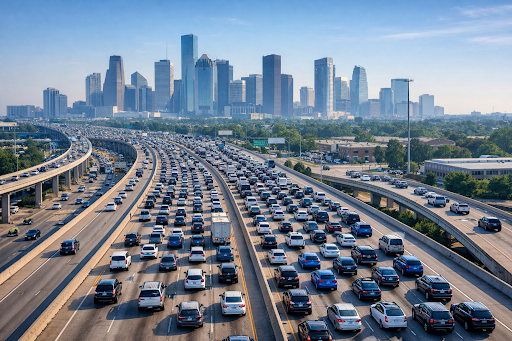
One major reason for Houston traffic congestion is low vehicle occupancy. Most cars on the road carry only one person. This means thousands of vehicles are using limited road space inefficiently. When road capacity remains the same but the number of single-occupancy vehicles increases, congestion becomes unavoidable. Carpooling addresses this imbalance by maximizing the use of each vehicle. Instead of multiple cars traveling the same route with one passenger each, shared rides reduce the total number of vehicles needed.
Why Vehicle Occupancy Plays a Key Role in Traffic Reduction
Traffic flow is influenced by the number of vehicles on the road, not just the number of commuters. When more people share rides, overall vehicle volume decreases. This reduction improves highway efficiency and allows traffic to move more smoothly.
Even a modest shift toward carpooling during peak hours can produce noticeable improvements in travel times. By reducing vehicle density, shared commuting helps prevent bottlenecks and stabilizes traffic flow.
Benefits of Carpooling for Traffic Congestion
Carpooling offers multiple advantages that directly ease Houston’s traffic burden. By sharing rides, commuters help reduce the number of vehicles on the road, which leads to smoother traffic flow and more reliable travel times. Here are some key benefits:
How Carpooling Reduces Houston Traffic Congestion
Table Of Contents How Carpooling Reduces Houston Traffic Congestion Houston’s Growing Traffic Problem Benefits of Carpooling for Traffic Congestion Economic and Community Advantages A Sustainable Long-Term Solution for Houston Start Carpooling with SafeTrip Houston’s growing traffic congestion continues to impact daily commuters, businesses, and overall productivity. With most vehicles carrying only one passenger, limited road space is used inefficiently, leading to long delays and increased fuel consumption. Carpooling offers a practical solution by reducing the number of vehicles on the road, improving traffic flow, lowering emissions, and cutting commuting costs. By increasing vehicle occupancy and using existing infrastructure more efficiently, shared rides help create a smoother, more sustainable transportation system for Houston. Introduction Traffic congestion has become one of the most persistent challenges for Houston commuters. Long delays on major highways, unpredictable travel times, and rising transportation costs make daily travel stressful and inefficient. As the city continues to grow, the number of vehicles on the road increases, placing even greater pressure on already busy highways. Major routes such as I-10, I-45, and US-59 experience heavy congestion during peak hours, especially between 7 AM to 9 AM and 4 PM to 7 PM. According to research from the Texas A&M Transportation Institute, Houston drivers lose dozens of hours each year due to traffic delays. These lost hours translate into reduced productivity, higher fuel expenses, and lower overall quality of life.Houston’s Growing Traffic Problem
Houston is one of the most car-dependent cities in the United States. According to the Texas A&M Transportation Institute, Houston commuters lose dozens of hours each year sitting in traffic. Major highways like I-10, I-45, and US-59 experience heavy congestion during peak hours, especially between 7 AM to 9 AM and 4 PM to 7 PM One major reason for Houston traffic congestion is low vehicle occupancy. Most cars on the road carry only one person. This means thousands of vehicles are using limited road space inefficiently. When road capacity remains the same but the number of single-occupancy vehicles increases, congestion becomes unavoidable. Carpooling addresses this imbalance by maximizing the use of each vehicle. Instead of multiple cars traveling the same route with one passenger each, shared rides reduce the total number of vehicles needed. Why Vehicle Occupancy Plays a Key Role in Traffic Reduction Traffic flow is influenced by the number of vehicles on the road, not just the number of commuters. When more people share rides, overall vehicle volume decreases. This reduction improves highway efficiency and allows traffic to move more smoothly. Even a modest shift toward carpooling during peak hours can produce noticeable improvements in travel times. By reducing vehicle density, shared commuting helps prevent bottlenecks and stabilizes traffic flow.Benefits of Carpooling for Traffic Congestion
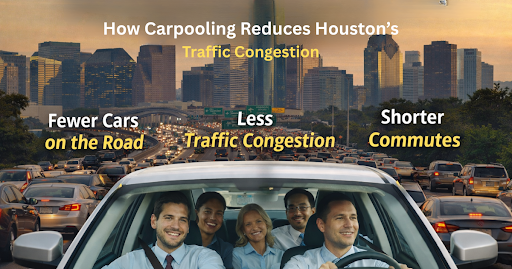
Carpooling offers multiple advantages that directly ease Houston’s traffic burden. By sharing rides, commuters help reduce the number of vehicles on the road, which leads to smoother traffic flow and more reliable travel times. Here are some key benefits:- Fewer Cars on the Road
- Shorter Commute Times
- Lower Fuel Consumption
- Improved Air Quality
- Increased Road Efficiency
Economic and Community Advantages
Beyond traffic relief, carpooling provides broader benefits. Reduced commuting stress can improve employee morale and punctuality. Businesses may also benefit from more consistent arrival times and increased productivity. On a community level, shared rides encourage collaboration and collective responsibility. When residents work together to reduce congestion, the city experiences long-term mobility improvements. Technology’s Role in Modern Carpooling Today’s digital platforms make carpooling more convenient and secure than ever before. Technology allows commuters to match with others traveling similar routes and schedules. Features such as real-time tracking, secure payments, and verified participants enhance reliability and safety. These advancements remove many of the traditional barriers to organizing shared rides, making carpooling a practical solution for modern commuters.A Sustainable Long-Term Solution for Houston
Expanding road infrastructure alone cannot permanently solve congestion challenges. As population growth continues, efficient transportation strategies become essential. Carpooling provides a scalable and cost-effective solution that works within existing systems. Even small increases in participation can significantly reduce traffic density across Houston’s highways. By embracing shared commuting, residents contribute to a smoother and more sustainable transportation network.Start Carpooling with SafeTrip
SafeTrip offers a structured and dependable carpooling solution designed for Houston commuters. By reducing single-occupancy vehicles on the road, SafeTrip helps ease congestion while saving time and money. Choosing carpooling isn’t just about convenience; it’s about building a smarter Houston. Sign up with SafeTrip today and take the first step toward a more efficient, cost-effective, and environmentally friendly commute. Shared rides are more than a transportation option; they are part of the solution to Houston’s traffic congestion challenge.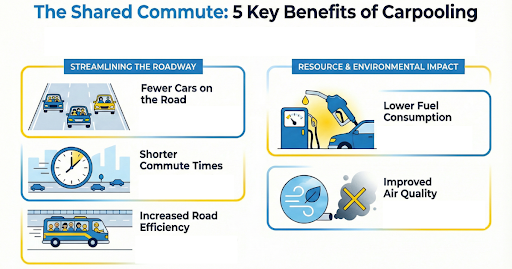
- Fewer Cars on the Road
Every shared ride means one less single-occupancy vehicle contributing to congestion. With more carpools, traffic density decreases, especially during peak hours.
- Shorter Commute Times
Reduced congestion translates into faster travel. Carpool lanes, where available, also give shared vehicles priority access, helping commuters bypass bottlenecks.
- Lower Fuel Consumption
Carpooling reduces the total number of trips, which cuts down on overall fuel usage. This not only saves money but also decreases demand on Houston’s already busy gas stations.
- Improved Air Quality
Fewer vehicles mean fewer emissions. Carpooling helps reduce pollution levels, contributing to cleaner air and a healthier environment for Houston residents.
- Increased Road Efficiency
By maximizing vehicle occupancy, carpooling makes better use of limited road space. This efficiency helps balance traffic flow and reduces the strain on highways like I-10 and I-45.
Economic and Community Advantages
Beyond traffic relief, carpooling provides broader benefits. Reduced commuting stress can improve employee morale and punctuality. Businesses may also benefit from more consistent arrival times and increased productivity.
On a community level, shared rides encourage collaboration and collective responsibility. When residents work together to reduce congestion, the city experiences long-term mobility improvements.
Technology’s Role in Modern Carpooling
Today’s digital platforms make carpooling more convenient and secure than ever before. Technology allows commuters to match with others traveling similar routes and schedules. Features such as real-time tracking, secure payments, and verified participants enhance reliability and safety.
These advancements remove many of the traditional barriers to organizing shared rides, making carpooling a practical solution for modern commuters.
A Sustainable Long-Term Solution for Houston
Expanding road infrastructure alone cannot permanently solve congestion challenges. As population growth continues, efficient transportation strategies become essential. Carpooling provides a scalable and cost-effective solution that works within existing systems.
Even small increases in participation can significantly reduce traffic density across Houston’s highways. By embracing shared commuting, residents contribute to a smoother and more sustainable transportation network.
Start Carpooling with SafeTrip
SafeTrip offers a structured and dependable carpooling solution designed for Houston commuters. By reducing single-occupancy vehicles on the road, SafeTrip helps ease congestion while saving time and money.
Choosing carpooling isn’t just about convenience; it’s about building a smarter Houston. Sign up with SafeTrip today and take the first step toward a more efficient, cost-effective, and environmentally friendly commute.
Shared rides are more than a transportation option; they are part of the solution to Houston’s traffic congestion challenge.
Targeted Keywords and Keyword Density
Keyword / Keyphrase | Occurrencs | Keyword Density |
Houston | 16 | 1.6% |
Carpooling | 14 | 1.4% |
Traffic Congestion | 10 | 1.0% |
Houston Traffic | 6 | 0.6% |
Commuters | 6 | 0.6% |
Shared Rides | 5 | 0.5% |
Vehicle Occupancy | 4 | 0.4% |
Traffic Flow | 4 | 0.4% |
SafeTrip | 3 | 0.3% |
Commute / Commuting | 3 | 0.3% |