
Employee Commute Benefits: Tax Advantages for Employers
Introduction
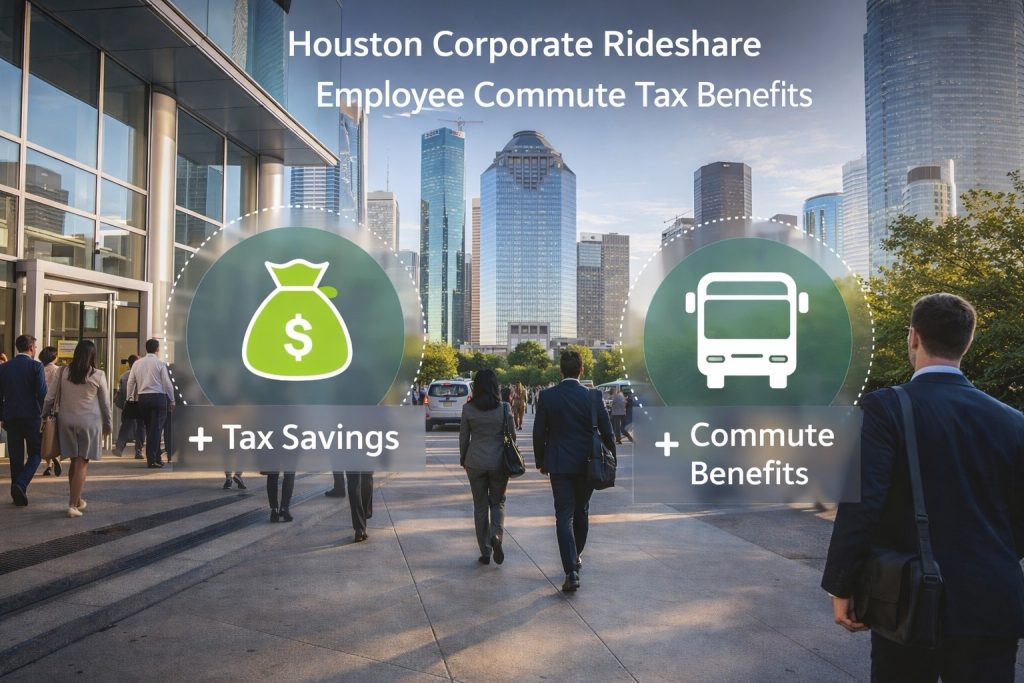
Houston traffic continues to impact productivity, punctuality, and employee satisfaction , especially during the daily Houston office commute and Katy office commute. Employers are now turning to corporate rideshare and structured employee commute assistance programs to reduce stress, lower transportation costs, and unlock tax advantages. In this guide, we break down how commute benefits work, the tax incentives available, and how SafeTrip helps Houston businesses improve their corporate transportation ROI.
Why Houston Employers Are Investing in Corporate Rideshare
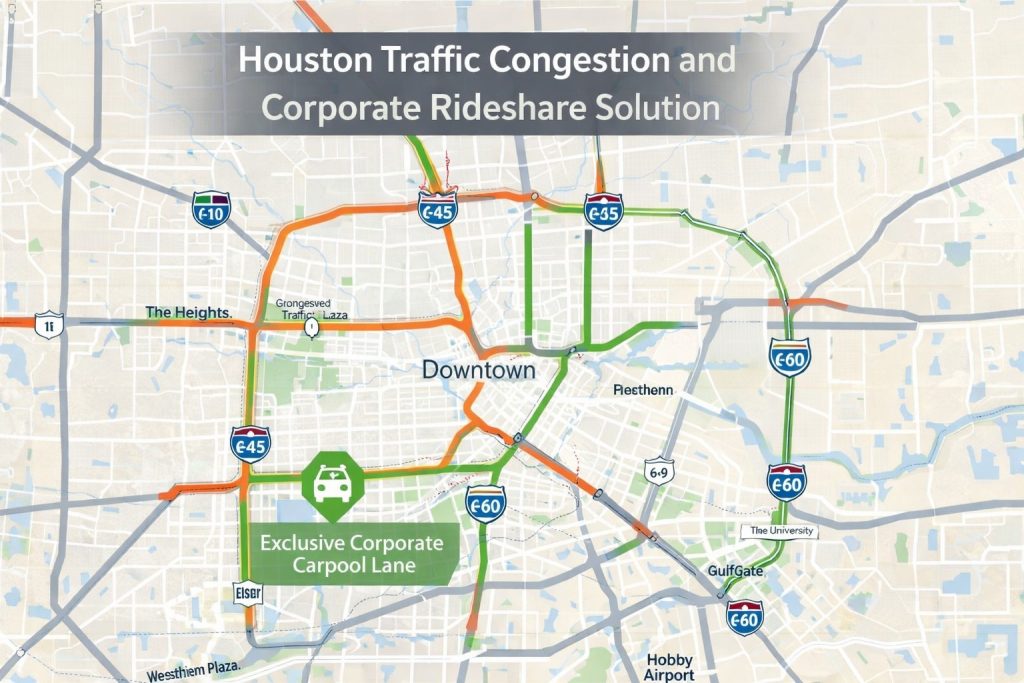
With rising fuel costs and increasing congestion across major corridors like I-10 and the 610 Loop, the traditional solo commute is becoming inefficient. Areas such as Katy and West Houston experience some of the longest average commute times in Texas.
According to data from the Texas Department of Transportation , Houston consistently ranks among the most congested metro areas in the state, increasing employer productivity losses.
By implementing Houston car pooling and Katy car pooling programs through corporate rideshare platforms, companies can:
- Reduce employee commute delays
- Improve attendance reliability
- Lower parking infrastructure costs
- Support sustainability goals
Corporate rideshare is no longer a perk , it’s becoming a competitive advantage.
Tax Advantages of Employee Commute Benefits
Employers offering structured commute benefits may qualify for tax efficiencies under federal transportation fringe benefit guidelines. Commuter benefits can be structured as:
- Pre-tax payroll deductions
- Employer-paid transportation subsidies
- Qualified vanpool or rideshare reimbursements
The Internal Revenue Service allows certain transportation fringe benefits to be excluded from employees’ taxable wages (subject to federal limits).
This means companies can:
- Reduce payroll tax liabilities
- Offer tax-efficient commute benefits
- Improve total compensation packages without increasing salary
For businesses managing a large Houston office commute, this translates into measurable annual savings.
How Much Have Companies Saved by Switching to Rideshare?
Source: U.S. Department of Transportation (USDOT), Internal Revenue Service (IRS) – Transportation Fringe Benefits, Texas A&M Transportation Institute (TTI)
Beyond tax efficiencies, companies nationwide have reported significant cost savings after shifting from solo commuting incentives and parking-heavy models to structured rideshare programs:
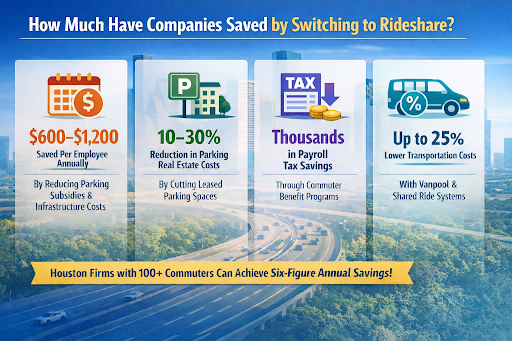
- Employers can save $600–$1,200 per employee annually by reducing parking subsidies and infrastructure demand.
- Companies that reduce leased parking spaces in dense metro areas report 10–30% savings on parking real estate costs.
- Structured commuter benefit programs can lower payroll tax exposure by thousands annually, depending on participation rates.
- Organizations implementing vanpool and shared ride systems have reported transportation cost reductions of up to 25% compared to traditional mileage reimbursement models.
For a Houston-based company with 100+ commuting employees, these savings can quickly scale into six-figure annual operational efficiencies.
Corporate Rideshare ROI: Beyond Tax Savings
The financial impact goes beyond tax deductions. A well-structured corporate rideshare ROI includes:
- Lower employee turnover
- Reduced late arrivals
- Higher employee satisfaction
- Improved ESG reporting metrics
Commute stress is one of the leading causes of workplace dissatisfaction in major metro areas. When employees spend less time navigating Houston traffic, productivity improves.
SafeTrip’s corporate transportation solutions allow companies to organize shared routes for employees traveling from Katy to Downtown Houston and other high-density corridors.
Structured Houston car pooling programs also reduce the number of single-occupancy vehicles, helping companies meet sustainability benchmarks.
Houston & Katy Office Commute Optimization
The Katy office commute along I-10 is one of the most heavily traveled corridors in the Houston metro area. Organized Katy car pooling initiatives reduce congestion pressure and improve arrival consistency.
By implementing employee commute assistance programs, employers can:
- Designated pickup hubs
- Structured ride scheduling
- Predictable arrival windows
- Reduced parking demand
SafeTrip supports customized route planning tailored to Houston office commute patterns.
When commute logistics are streamlined, companies report measurable gains in employee punctuality and morale.
Sustainability & Corporate Responsibility
Corporate rideshare also strengthens sustainability initiatives. Fewer vehicles on the road mean:
- Reduced carbon emissions
- Lower fuel consumption
- Improved community mobility
With Houston traffic worsening year over year, corporate participation in shared commute solutions contributes to broader congestion mitigation efforts.
Organizations that actively support Houston car pooling programs position themselves as forward-thinking employers committed to employee well-being and environmental responsibility.
Final Thoughts
Corporate rideshare programs provide more than convenience as they offer real tax advantages, measurable ROI, and practical solutions to Houston traffic challenges. By restructuring employee commute systems, Houston employers can reduce costs while improving workplace satisfaction.
Take the Next Step
Ready to optimize your Houston office commute and unlock corporate tax benefits?
👉 Book your SafeTrip ride today or explore our corporate transportation solutions.