
How to Save Money on Your Daily Houston Commute
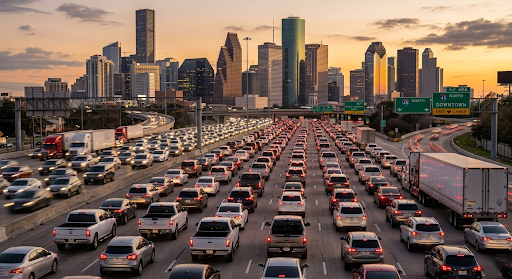
If your daily drive feels more expensive than ever, you’re not imagining it. Between rising gas prices, higher insurance premiums, tolls, and parking fees, the average Houston commute now costs hundreds of dollars every month. Add long hours stuck in Houston traffic, and it’s not just your wallet that suffers, it’s your time, energy, and peace of mind.
According to the Texas A&M Transportation Institute, drivers in major Texas cities lose more than 50 hours per year sitting in congestion. For many professionals handling a Houston office commute, that translates to lost productivity and rising stress.
In this guide, you’ll discover practical, real-world ways to reduce commuting costs without sacrificing convenience or safety.
What You’ll Learn in This Blog
- The real cost of driving alone in Houston
- Smart strategies to reduce fuel and parking expenses
- How timing affects your commute budget
- The savings potential of ride-sharing and shuttle services
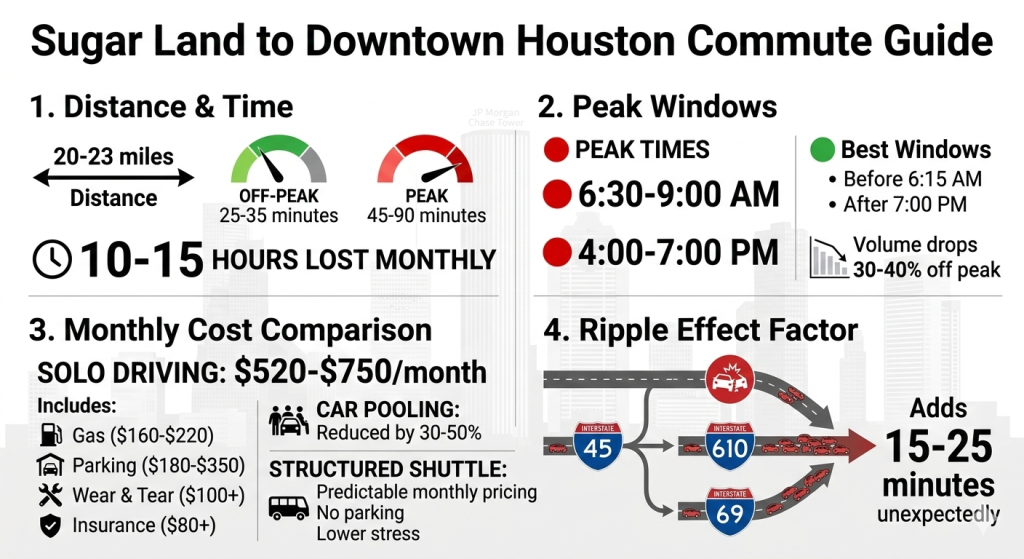
- Practical examples for routes like Sugar Land to downtown Houston
- How structured transport options can lower monthly costs
The Real Cost of Driving Alone in Houston
Most people only think about fuel. But your total commute expense includes:
- Gas (avg. $3–$3.50 per gallon fluctuating)
- Insurance (Texas premiums increased nearly 15% in recent years)
- Maintenance and depreciation
- Parking fees (downtown can cost $150–$250/month)
- Tolls on major Houston highways
If you drive 30 miles round-trip daily, you may spend $300–$600 per month and that’s before factoring in the time lost during Houston rush hour.
Routes like I-45 traffic corridors are especially unpredictable. A 25-minute drive can turn into 60 minutes during peak periods.

1️⃣ Adjust the Timing of Your Commute
One of the simplest ways to save money is adjusting your schedule.
The best time to commute in Houston is typically:
- Before 6:30 AM
- After 9:30 AM
- Before 3:30 PM
- After 7:00 PM
Fuel efficiency drops in stop-and-go traffic. Studies show aggressive acceleration and idling can increase fuel consumption by 10–20%. Avoiding peak Houston rush hour means fewer stops, less gas burned, and lower stress.
If your employer allows flexible hours, shifting your start time could save both time and fuel each week.
For live traffic monitoring, tools like Houston TranStar provide real-time congestion updates.
2️⃣ Consider Houston Car Pooling
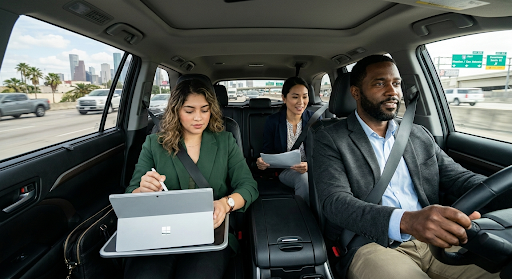
Sharing rides is one of the fastest ways to cut costs. With Houston car pooling, you divide fuel, tolls, and parking expenses.
If four coworkers share a ride:
- Fuel cost drops by up to 75%
- Parking may be split or eliminated
- Vehicle wear and tear decreases
For residents in suburbs like Katy, structured Katy car pooling groups are growing because the Katy office commute can exceed 45–60 minutes during peak hours.
You can explore carpool matching services like:
3️⃣ Use Park & Ride or Shuttle Services
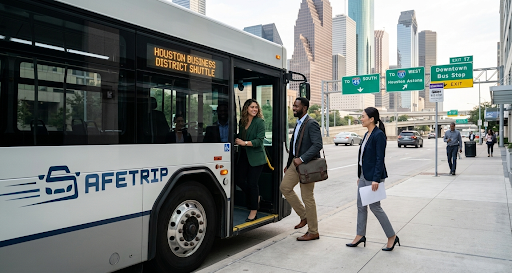
For long-distance routes such as Sugar Land to downtown Houston, driving the full distance daily can be costly. Park & Ride programs help reduce fuel use and downtown parking fees.
METRO Park & Ride offers commuter bus services connecting suburbs to central business districts.
Another alternative is booking a seat with structured commuter shuttle platforms like SafeTrip . These services provide:
- Reserved seating
- Predictable schedules
- Reduced per-person cost compared to solo driving
- No parking stress
Instead of spending $500+ monthly, many commuters reduce costs by 30–50% using shared transport.
4️⃣ Track and Optimize Fuel Spending
Apps like:
help find cheaper fuel near you. Saving even 20–30 cents per gallon adds up over a year.
Also:
- Keep tires properly inflated
- Avoid rapid acceleration
- Maintain regular oil changes
- Reduce unnecessary idling during I-45 traffic
These small habits can improve fuel efficiency by 5–10%.
5️⃣ Reduce Wear and Tear on Houston Highways
Daily driving on congested Houston highways increases:
- Brake wear
- Tire replacement frequency
- Engine strain
AAA estimates the average annual vehicle operating cost exceeds $9,000 nationwide when including depreciation. Reducing mileage by sharing rides or using shuttle options can significantly cut that number.
6️⃣ Compare Monthly Costs: Driving vs Shared Transport
Expense Category | Solo Driving | Car Pooling | Shuttle Service |
Fuel | High | Shared | Included |
Parking | High | Shared | Often Not Needed |
Maintenance | High | Reduced | None |
Stress | High | Moderate | Low |
Monthly Cost Estimate | $400–$600 | $150–$300 | $200–$350 |
When you compare all factors, structured commuting options often win financially.
7️⃣ Plan Smarter Routes
Not all roads are equal. Some parts of I-45 traffic corridors are more congestion-prone than others. Use navigation tools to avoid bottlenecks.
Real-time navigation apps:
- Google Maps
- Waze
Planning ahead saves fuel and reduces delays.
Final Thoughts: Small Changes, Big Savings
Your daily drive doesn’t have to drain your budget. By:
- Adjusting the best time to commute in Houston
- Exploring Houston car pooling or Katy car pooling
- Considering shuttle options for your Houston office commute
- Monitoring fuel usage
- Avoiding peak Houston rush hour
You could potentially save thousands annually.
If you’re tired of unpredictable Houston traffic and rising commuting costs, it may be time to rethink how you travel.
Ready to Lower Your Commuting Costs?
Explore affordable, comfortable, and structured commuting options with SafeTrip.
Visit: https://www.nextsafetrip.com
Learn about Corporate Programs: https://www.nextsafetrip.com/safetrip-corporate/
Read more commuting tips: https://www.nextsafetrip.com/blog/
Contact the team: https://www.nextsafetrip.com/contact-us/
Start saving money and time on your commute today.