
Texas Medical Center Commute: Park & Ride vs. Rideshare
Introduction – Houston Commute Realities
Houston’s booming job market and sprawling metro area make commuting a central part of daily life for thousands of workers. Whether you’re heading to the Texas Medical Center, navigating Houston traffic, or tackling the stretch from Sugar Land to downtown Houston, choosing the right commute option can be a difference-maker. For many professionals,especially those doing a Houston office commute or Katy office commute, deciding between a Park & Ride service or a rideshare option like Uber or Lyft can impact time, cost, and stress levels. Today, we’ll compare these two popular options and help you decide which fits your lifestyle and schedule.

Understanding Houston Traffic Patterns
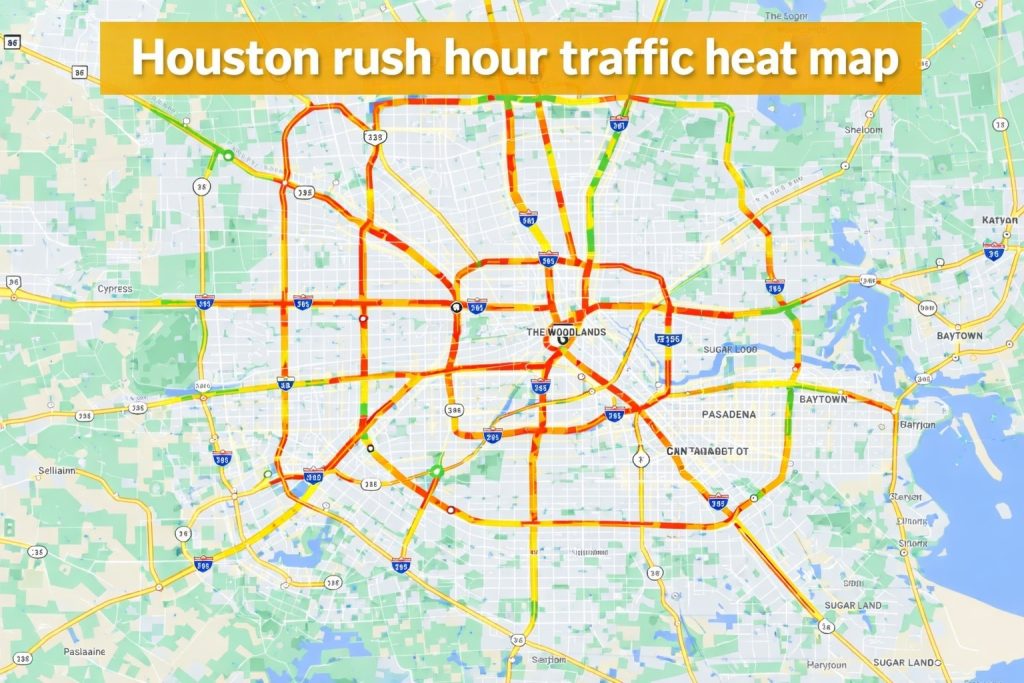
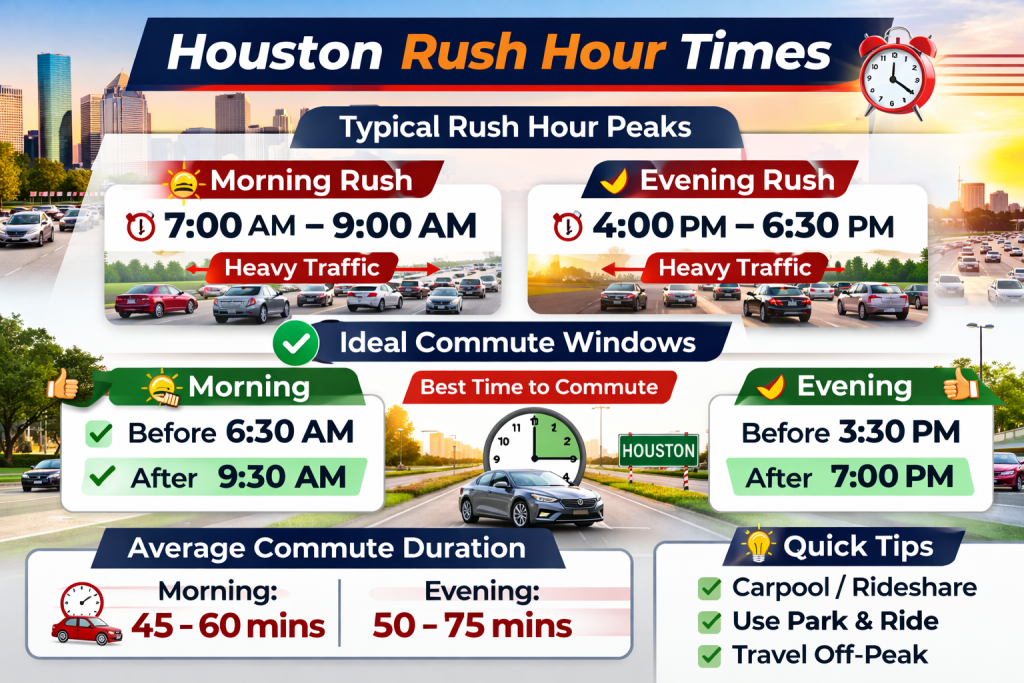
Houston traffic is notoriously unpredictable. Major thoroughfares like I-45, US-59, and the Houston highways experience heavy congestion, especially during Houston rush hour (typically 6:30–9:30 AM and 4:30–7:00 PM). Add in construction zones near key employment hubs like the Texas Medical Center, and your commute can quickly become frustrating.
According to the Texas A&M Transportation Institute’s Urban Mobility Report Houston consistently ranks among the top U.S. cities for congestion delays.
Additionally, data from INRIX Global Traffic Scorecard highlights Houston as one of the most delay-prone metro areas in Texas during peak commuting hours:
If you’re traveling from farther suburbs like Katy, Sugar Land, or The Woodlands, dealing with tangled highways and stop-and-go traffic becomes part of daily life. Car dependency is high in Houston, making Houston car pooling and Katy car pooling essential solutions for reducing stress and saving money.
What Is Park & Ride?
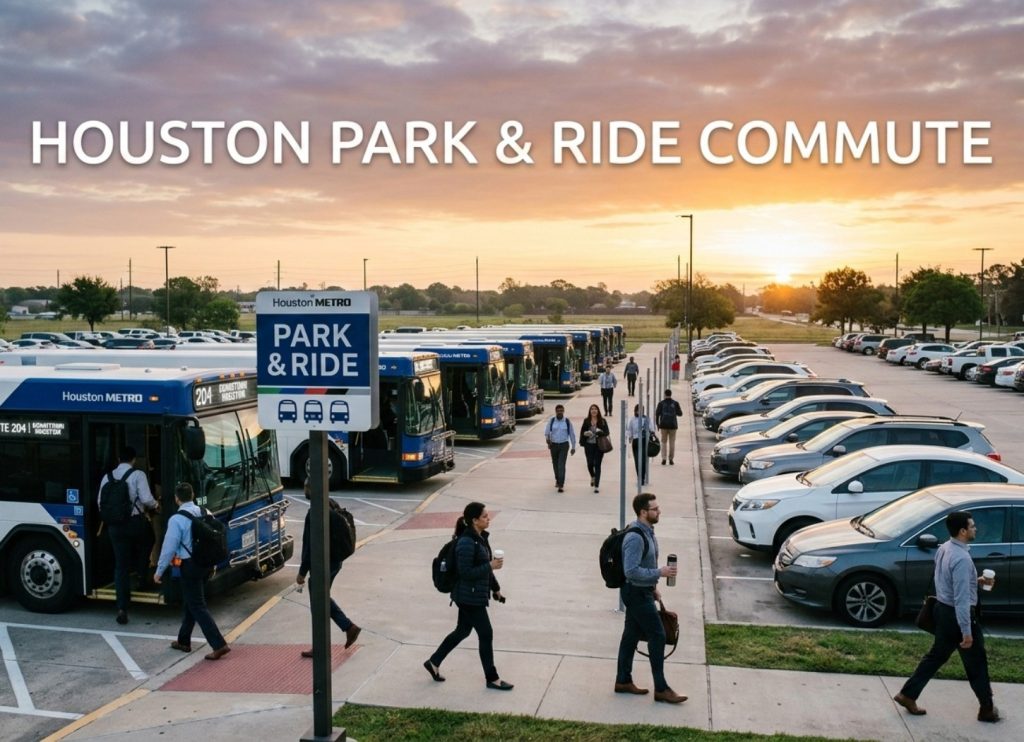
Park & Ride refers to commuter bus services where you park your car at a designated lot and ride a bus into major work districts like downtown or the Texas Medical Center. Houston Metro operates several Park & Ride lines designed to ease congestion and cut down on commuting hassles and In Houston, services are operated by METRO Houston .
Advantages of Park & Ride :
- Cost-effective: Lower monthly expense than daily gas and parking fees.
- Stress-free: You avoid freeway traffic behind the wheel.
- Eco-friendly: Reduces overall vehicle emissions.
Drawbacks:
- Fixed schedules: May not align with all work hours.
- Possible transfers: Might require a shuttle or another bus to the final destination.
What Is Rideshare?
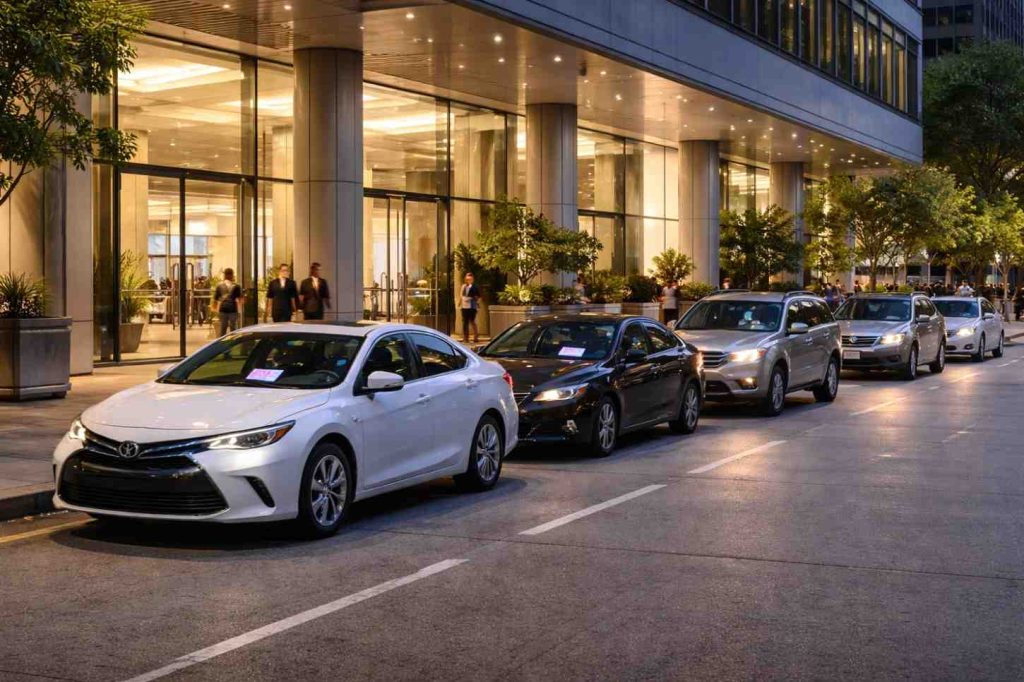
Ridesharing in Houston is a transportation option where two or more people share one vehicle while traveling in the same direction. Also known as carpooling in Houston, it helps commuters lower fuel costs, reduce traffic congestion, and cut carbon emissions.
With long daily commutes across Downtown, the Energy Corridor, and the Medical Center, Houston carpool options offer a smart and cost-effective alternative to driving alone. Shared commuting makes travel more affordable, efficient, and environmentally friendly for Houston residents.
Advantages of Rideshare:
- Door-to-door service: Convenient pickup and drop-off.
- Flexible timing: No fixed schedule.
- Shared rides available: Reduces cost with car pooling options.
Drawbacks:
- Cost can add up: Especially during peak traffic or long routes like Katy to Houston.
- Surge pricing: Higher fares when demand is high (e.g., Houston rush hour).
What Is SafeTrip?
SafeTrip is a structured commute-based car pooling service designed specifically for repeat weekday office commuters. Unlike public transit or on-demand rideshare, SafeTrip focuses on predictable routes such as Katy to the Texas Medical Center or Sugar Land to Downtown Houston.
SafeTrip blends the affordability of Park & Ride with the convenience of rideshare , offering flat pricing, no surge fees, and route optimization tailored to working professionals.
Advantages of SafeTrip:
- Flat, predictable pricing: No surge fees during rush hour.
- Commute-focused routes: Designed around real office corridors.
- Professional structure: Built specifically for repeat weekday commuters.
- Door-to-door or structured pickup zones: No parking required.
Drawbacks:
- Route-based availability: May operate only on high-demand commuter corridors.
- Primarily weekday-focused: Designed for office schedules rather than casual trips.
Feature | Park & Ride | Rideshare (Uber/Lyft) | SafeTrip (Structured Commute Service) |
Cost | Generally cheaper monthly | Varies, can be high | Flat, predictable commute pricing |
Flexibility | Set schedules | On-demand | Structured routes with commuter focus |
Commute Time Control | Less control | Full control | Optimized fixed commuter corridors |
Traffic Stress | Minimal | Moderate to high | Reduced via planned shared routes |
Surge Pricing | No | Yes | No surge pricing |
Best For | Predictable schedules | Irregular hours | Daily office commuters (Katy, Sugar Land, TMC routes) |
Parking Included | Yes | No | Pickup-based, no parking needed |
Designed For | Public transit users | General city riders | Working professionals & repeat commuters |
Commuting Costs
A big question for commuters is expense. Park & Ride typically costs a flat monthly rate and includes parking. Meanwhile, rideshare costs depend on distance, traffic, time of day, and whether surge pricing is active. If you’re doing a long-distance commute, with say Sugar Land to downtown Houston , rideshare fares can become pricey.
SafeTrip positions itself between these two models by offering structured pricing designed specifically for office commuters, avoiding the unpredictability of peak-hour surcharges.
Time Management and Convenience
If your office hours are structured and consistent, Park & Ride gets you from point A to B without changing lanes in gridlocked traffic. Houston consistently ranks among major metro areas for congestion, based on mobility data from the Texas A&M Transportation Institute.
That said, Park & Ride requires precise timing to sync with shuttle departures. Rideshare allows flexible departure times but means you’re still subject to the same Houston traffic delays as other vehicles on the road.
SafeTrip offers a middle-ground approach by planning structured commuter corridors that reduce unpredictability while still offering more direct routing than traditional bus systems.
Commuter Comfort and Productivity
With Park & Ride, you can read, work, or catch up on emails while someone else handles the driving. Public transit commuting trends and time-use data reported by the Bureau of Transportation Statistics show that many transit riders use commute time productively.
Rideshare also gives you time to multitask, but being dropped directly at your office especially if you work late or start early remains a major convenience advantage.
SafeTrip commuters benefit from structured, repeat travel patterns, allowing them to plan their mornings more predictably and reduce the mental fatigue associated with daily driving.
Best Time to Commute in Houston
When it comes to minimizing traffic stress, timing is everything. The best time to commute in Houston is outside of high-volume windows: typically before 6:30 AM or after 9:30 AM for morning commutes, and before 4:30 PM or after 7:00 PM for evenings. However, not all jobs allow such flexibility.
Using Park & Ride, rideshare, or structured commute services like SafeTrip strategically around these hours can significantly improve travel time , especially on notorious corridors like I-45 or the 610 Loop.
Tips to Optimize Your Choice
Combine options: Park closer to a Park & Ride route and use a shared ride to reach the lot.
Use apps: Metro schedules and rideshare apps help optimize departure times.
Carpool perks: Explore Houston car pooling and Katy car pooling groups to share costs.
Flex scheduling: If your workplace allows flexible hours, adjust departure to avoid peak congestion.
Choose structured commute services: If you follow a consistent office schedule, route-based services like SafeTrip can offer pricing stability and reduced stress.
Final Thoughts & Smart Commute Options
Both Park & Ride and rideshare have clear benefits for Houston commuters. Park & Ride is ideal for predictable schedules and cost savings, while rideshare offers unmatched flexibility.
SafeTrip introduces a third alternative a structured, commuter-first transportation model designed specifically for daily office routes.
Your best option depends on your work hours, budget, and tolerance for traffic.
🚗 Ready to Upgrade Your Houston Commute?
Stop guessing your arrival time. Stop overpaying during Houston rush hour.
Whether you’re commuting from Katy, Sugar Land, or navigating daily Houston traffic to the Texas Medical Center, a smarter solution is within reach.
✔ Choose Predictable, Professional Commute Rides
Explore how structured Houston car pooling works with SafeTrip
✔ See Transparent Pricing for Daily Office Commutes
No surge fees. No surprises. Just consistent rates built for professionals.
✔ Commute Smarter Not Harder
If you’re ready to simplify your Houston office commute:
Book your SafeTrip ride today
Secure reliable, structured transportation designed around real commuter routes.
Or
Become part of Houston’s growing commute-based car pooling network and earn with predictable weekday demand.