
The Environmental Impact of Your Daily Houston Commute
Houston’s daily traffic congestion does more than waste time; it significantly contributes to rising carbon emissions and declining air quality. With single-occupancy vehicles dominating major highways, per-person emissions remain high across the city. Transportation is one of the largest sources of greenhouse gases in the United States, and Houston’s sprawling layout makes the issue even more pressing. This guide explains how your commute affects the environment and how smarter shared transportation options like SafeTrip can help reduce your carbon footprint while improving urban mobility.
For many professionals in Houston, commuting is simply part of the daily routine. Long drives, packed highways, and unpredictable delays have become normal. But beyond the frustration and fuel expenses, there is a larger issue at play: the environmental cost of commuting.
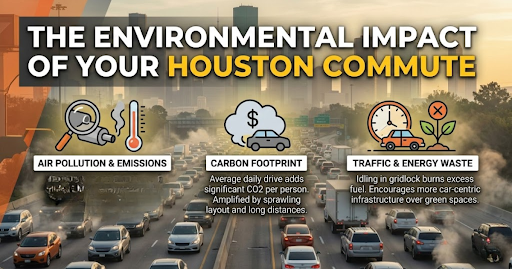
Houston is one of the largest and most vehicle dependent metro areas in the country. With limited public transit coverage and significant suburban expansion, most residents rely on personal vehicles to get to work. As a result, traffic congestion continues to grow, and so do emissions. Understanding how your commute affects air quality and climate change is the first step toward making more sustainable travel decisions.
Houston Traffic and Rising Carbon Emissions
Houston’s transportation network has a measurable environmental impact. According to the U.S. Environmental Protection Agency (EPA), transportation accounts for approximately 29% of total U.S. greenhouse gas emissions, making it the largest contributing sector nationwide.
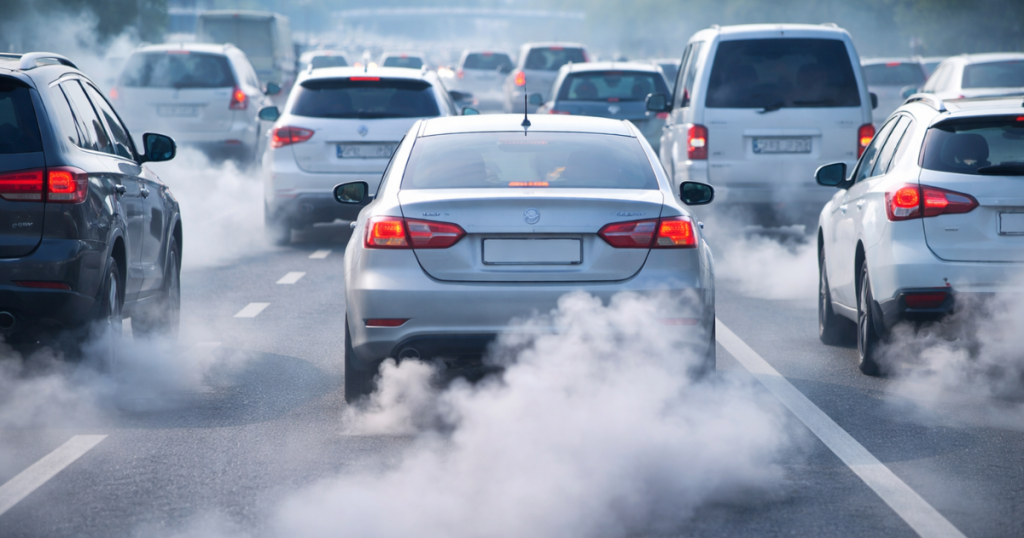
Houston is one of the largest and most vehicle dependent metro areas in the country. With limited public transit coverage and significant suburban expansion, most residents rely on personal vehicles to get to work. As a result, traffic congestion continues to grow, and so do emissions. Understanding how your commute affects air quality and climate change is the first step toward making more sustainable travel decisions.
Houston Traffic and Rising Carbon Emissions
Houston’s transportation network has a measurable environmental impact. According to the U.S. Environmental Protection Agency (EPA), transportation accounts for approximately 29% of total U.S. greenhouse gas emissions, making it the largest contributing sector nationwide.
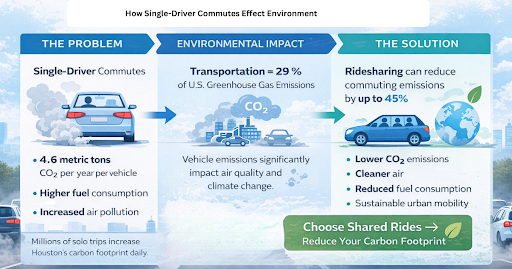
The average passenger vehicle emits about 4.6 metric tons of CO₂ annually. When multiplied by hundreds of thousands of daily commuters, the numbers become staggering. Because most Houston commuters travel alone, emissions per passenger remain high compared to shared transportation options.
Beyond climate impact, poor air quality can lead to:
- Increased asthma rates
- Higher healthcare costs
- Reduced overall public health
- Greater environmental strain on urban communities
Driving alone also increases traffic density, which further worsens congestion and fuel consumption. In essence, single driver commuting creates a cycle where more cars lead to more delays and more emissions.
How Ridesharing Reduces Environmental Impact
Ridesharing provides a practical solution for reducing commuter related emissions. When multiple passengers share one vehicle, the carbon footprint per rider decreases significantly.
Research shows that carpooling and shared rides can reduce individual commuting emissions by up to 45%. The U.S. Department of Transportation sustainability initiatives highlight how reducing vehicle miles traveled directly lowers emissions and fuel consumption.
In a city like Houston, where commuting distances are often long and public transportation access can be limited, shared ride services offer a realistic middle ground between driving alone and traditional transit systems.
By optimizing routes and combining trips, rideshare services help minimize unnecessary mileage, directly lowering greenhouse gas output.
The Broader Environmental Benefits of Smarter Commuting
Reducing emissions is only part of the story. Smarter commuting strategies also support long term sustainability goals for growing metropolitan areas.
When fewer cars are on the road, cities benefit from the following:
- Improved air quality
- Reduced noise pollution
- Lower urban heat buildup
- More efficient infrastructure use
Over time, widespread adoption of shared transportation can help cities delay costly highway expansions and reduce environmental degradation linked to excessive roadway construction.
How SafeTrip Supports Greener Houston Travel

SafeTrip is designed not just for convenience but for responsible commuting. By encouraging shared rides and optimizing travel routes, SafeTrip helps reduce the environmental footprint of daily transportation in Houston.
SafeTrip supports sustainability by:
- Reducing single-occupancy vehicle trips
- Lowering per passenger emissions
- Minimizing fuel waste through efficient routing
- Supporting cleaner urban mobility solutions
When Houston commuters choose SafeTrip instead of driving alone, they actively contribute to easing congestion and improving citywide air quality. Each shared ride removes potential vehicles from already crowded highways.
Sustainability doesn’t require dramatic lifestyle changes; sometimes it begins with a smarter transportation choice.
Conclusion
The environmental impact of commuting in Houston extends far beyond fuel costs and traffic frustration. With transportation serving as one of the largest contributors to greenhouse gas emissions, daily travel decisions matter.
Single-driver commutes increase carbon output, worsen air quality, and contribute to long-term climate challenges. However, shared mobility solutions provide a practical way to reduce emissions while maintaining flexibility and convenience.
Choosing smarter rides like SafeTrip allows commuters to lower their environmental footprint without sacrificing reliability. Every shared trip represents a step toward cleaner air, reduced congestion, and a more sustainable Houston.
Book your SafeTrip ride today and make your daily commute part of the solution.