
The Future of Ridesharing: What's Coming in 2026
Introduction
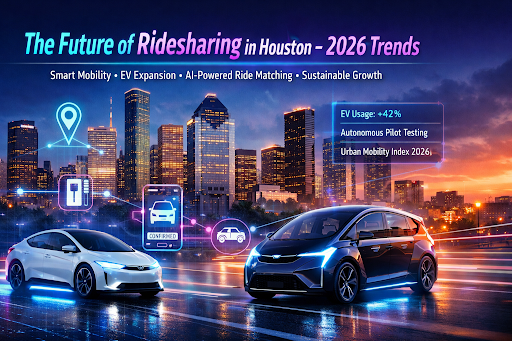
The rideshare industry is evolving rapidly as new transportation trends reshape how cities move. With rising Houston traffic and growing commuter demand, 2026 is set to bring major shifts affecting the daily Houston commute. In this guide, we’ll explore what’s ahead, from autonomous vehicles to Texas rideshare laws and how these changes will impact professionals commuting across Houston and Katy.
Smarter Transportation Trends Reshaping Houston
The future of ridesharing in 2026 centers around efficiency and sustainability. Across major metro areas like Houston, structured car pooling and commuter-focused rides are replacing unpredictable, late-night-only demand.
According to the U.S. Bureau of Labor Statistics, transportation demand continues rising in large metro regions due to urban expansion and workforce growth. In Houston specifically:
- Over 70% of commuters rely on personal vehicles
- Average commute time exceeds 27 minutes
- Houston traffic congestion remains among the highest in Texas
These trends are driving growth in Houston car pooling and Katy car pooling models designed around office commuters rather than random trip matching.
To understand how structured commuting works, explore How SafeTrip works for Drivers . Platforms focused on predictable commute routes are becoming central to the future of ridesharing 2026.
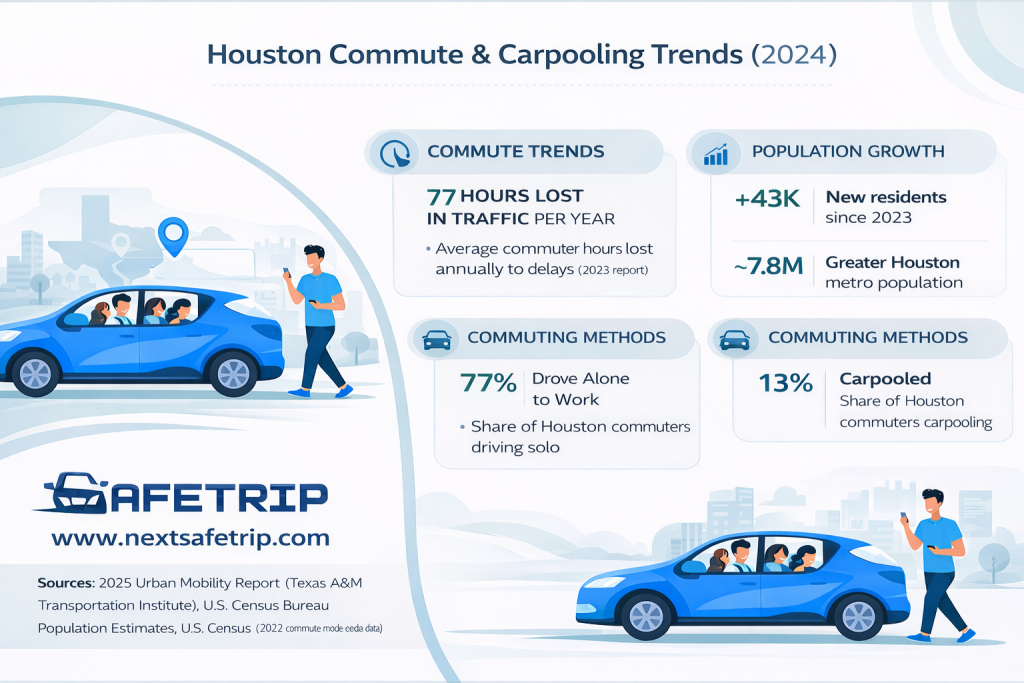
Sources: Texas A&M Transportation Institute 2025 Urban Mobility Report; U.S. Census Bureau Population Estimates; U.S. Census Transportation Modal Data; Houston Chronicle traffic reporting.
Autonomous Vehicles and the Next Phase of Rideshare
One of the most discussed transportation trends is the development of autonomous vehicles. Companies across the U.S. are testing self-driving technology aimed at reducing operational costs and improving efficiency.
The National Highway Traffic Safety Administration continues monitoring autonomous vehicle pilot programs and safety frameworks.
While full-scale deployment in Houston may still be several years away, partial automation and driver-assist technologies are already influencing the rideshare industry.
For now, however, human drivers remain critical for daily Houston office commute and Katy office commute routes. Structured platforms that blend technology with verified drivers are expected to dominate before full automation becomes mainstream.
Texas Rideshare Laws and Regulatory Shifts
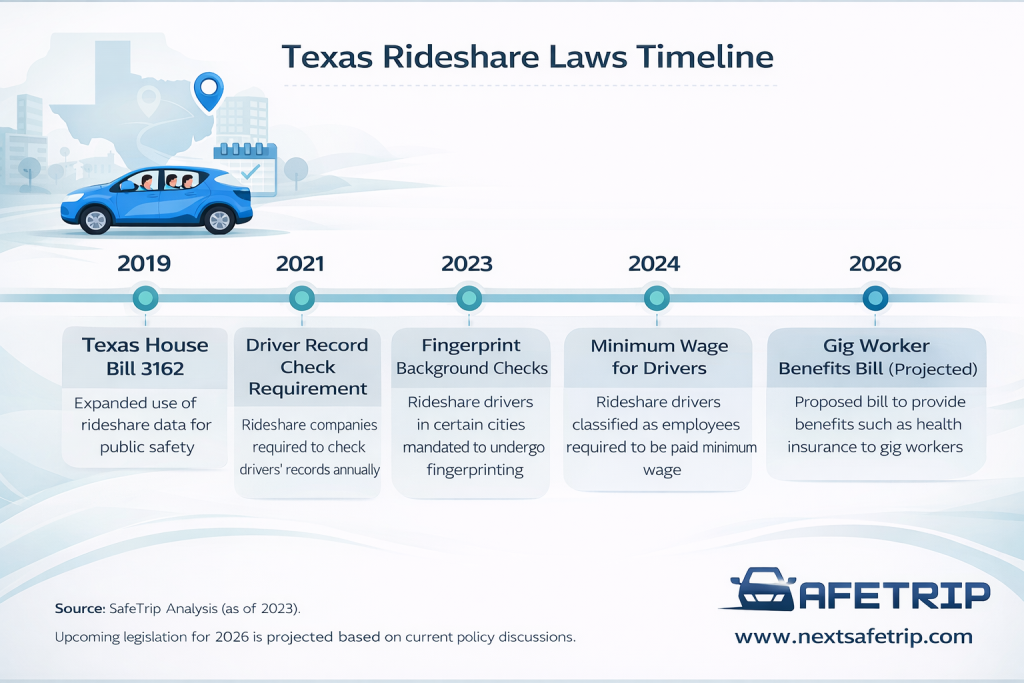
Regulation is another key factor shaping the rideshare industry. Updates in Texas rideshare laws are focusing on:
- Driver background verification
- Insurance compliance
- Passenger safety standards
- Transparent pricing
As oversight increases, platforms emphasizing compliance and safety gain competitive advantage.
SafeTrip aligns with these evolving Rideshare regulations by implementing structured scheduling and verified drivers. Learn more about SafeTrip safety standards and how the platform supports both riders and drivers under Texas guidelines.
Stronger regulatory frameworks are expected to bring more trust and long-term sustainability to the rideshare ecosystem.
The Shift Toward Structured Commute Rides
The biggest shift in the future of ridesharing 2026 isn’t flashy , it’s practical.
Instead of relying solely on surge-based demand, more professionals are turning to structured rides designed around peak commute hours. With increasing Houston traffic congestion, predictable scheduling reduces stress for both riders and drivers.
Structured commute rides offer:
- Consistent weekday demand
- Reduced idle time
- Improved fuel efficiency
- Stable pricing
If you regularly manage a Houston office commute or Katy office commute, structured pooling can significantly reduce costs compared to single-passenger trips.
Compare your current travel costs with SafeTrip’s transparent commute pricing to see how organized car pooling supports long-term savings.
What This Means for Houston in 2026
Houston’s expanding workforce and highway congestion ensure that rideshare remains essential. However, the industry is shifting from chaotic on-demand matching toward smarter, commuter-focused systems.
In 2026, expect:
- Greater use of AI route optimization
- Expanded commuter pooling networks
- More regulatory oversight
- Gradual autonomous integration
- Stronger emphasis on safety and sustainability
For commuters facing daily Houston traffic, choosing the right rideshare platform will matter more than ever.
The 2026 Houston Outlook
The rideshare industry in 2026 is becoming smarter, more regulated, and more commuter-focused. As transportation trends evolve, structured car pooling solutions will play a central role in improving the Houston commute.
🚗 Ready for the Future of Commuting?
Don’t wait for traffic to get worse.
Book your SafeTrip ride today
Secure reliable, structured transportation built for Houston professionals.
Or if you’re interested in driving:
Join as a driver
Be part of Houston’s growing car pooling movement and earn with predictable commute demand.