Author name: nextsafetrip_lz85sm

Passenger Guide

How to Save Money on Your Daily Houston Commute

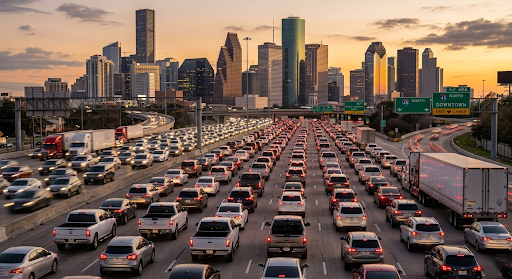
How to Save Money on Your Daily Houston Commute If your daily drive feels more expensive than ever, you’re not imagining it. Between rising gas prices, higher insurance premiums, tolls, and parking fees, the average Houston commute now costs hundreds of dollars every month. Add long hours stuck in Houston traffic, and it’s not just your wallet that suffers, it’s your time, energy, and peace of mind. According to the Texas A&M Transportation Institute, drivers in major Texas cities lose more than 50 hours per year sitting in congestion. For many professionals handling a Houston office commute, that translates to lost productivity and rising stress. In this guide, you’ll discover practical, real-world ways to reduce commuting costs without sacrificing convenience or safety.      What You’ll Learn in This Blog The real cost of driving alone in Houston Smart strategies to reduce fuel and parking expenses How timing affects your commute budget The savings potential of ride-sharing and shuttle services Practical examples for routes like Sugar Land to downtown Houston How structured transport options can lower monthly costs   The Real Cost of Driving Alone in Houston Most people only think about fuel. But your total commute expense includes: Gas (avg. $3–$3.50 per gallon fluctuating) Insurance (Texas premiums increased nearly 15% in recent years) Maintenance and depreciation Parking fees (downtown can cost $150–$250/month) Tolls on major Houston highways If you drive 30 miles round-trip daily, you may spend $300–$600 per month  and that’s before factoring in the time lost during Houston rush hour. Routes like I-45 traffic corridors are especially unpredictable. A 25-minute drive can turn into 60 minutes during peak periods. 1️⃣ Adjust the Timing of Your Commute One of the simplest ways to save money is adjusting your schedule. The best time to commute in Houston is typically: Before 6:30 AM After 9:30 AM Before 3:30 PM After 7:00 PM Fuel efficiency drops in stop-and-go traffic. Studies show aggressive acceleration and idling can increase fuel consumption by 10–20%. Avoiding peak Houston rush hour means fewer stops, less gas burned, and lower stress. If your employer allows flexible hours, shifting your start time could save both time and fuel each week. For live traffic monitoring, tools like Houston TranStar  provide real-time congestion updates. 2️⃣ Consider Houston Car Pooling Sharing rides is one of the fastest ways to cut costs. With Houston car pooling, you divide fuel, tolls, and parking expenses. If four coworkers share a ride: Fuel cost drops by up to 75% Parking may be split or eliminated Vehicle wear and tear decreases For residents in suburbs like Katy, structured Katy car pooling groups are growing because the Katy office commute can exceed 45–60 minutes during peak hours. You can explore carpool matching services like: METRO Houston  Waze Carpool    3️⃣ Use Park & Ride or Shuttle Services For long-distance routes such as Sugar Land to downtown Houston, driving the full distance daily can be costly. Park & Ride programs help reduce fuel use and downtown parking fees. METRO Park & Ride offers commuter bus services connecting suburbs to central business districts. Another alternative is booking a seat with structured commuter shuttle platforms like SafeTrip . These services provide: Reserved seating Predictable schedules Reduced per-person cost compared to solo driving No parking stress Instead of spending $500+ monthly, many commuters reduce costs by 30–50% using shared transport. 4️⃣ Track and Optimize Fuel Spending Apps like: GasBuddy  help find cheaper fuel near you. Saving even 20–30 cents per gallon adds up over a year. Also: Keep tires properly inflated Avoid rapid acceleration Maintain regular oil changes Reduce unnecessary idling during I-45 traffic These small habits can improve fuel efficiency by 5–10%. 5️⃣ Reduce Wear and Tear on Houston Highways Daily driving on congested Houston highways increases: Brake wear Tire replacement frequency Engine strain AAA estimates the average annual vehicle operating cost exceeds $9,000 nationwide when including depreciation. Reducing mileage by sharing rides or using shuttle options can significantly cut that number. 6️⃣ Compare Monthly Costs: Driving vs Shared Transport Expense Category Solo Driving Car Pooling Shuttle Service Fuel High Shared Included Parking High Shared Often Not Needed Maintenance High Reduced None Stress High Moderate Low Monthly Cost Estimate $400–$600 $150–$300 $200–$350 When you compare all factors, structured commuting options often win financially. 7️⃣ Plan Smarter Routes Not all roads are equal. Some parts of I-45 traffic corridors are more congestion-prone than others. Use navigation tools to avoid bottlenecks. Real-time navigation apps: Google Maps Waze Planning ahead saves fuel and reduces delays. Final Thoughts: Small Changes, Big Savings Your daily drive doesn’t have to drain your budget. By: Adjusting the best time to commute in Houston Exploring Houston car pooling or Katy car pooling Considering shuttle options for your Houston office commute Monitoring fuel usage Avoiding peak Houston rush hour You could potentially save thousands annually. If you’re tired of unpredictable Houston traffic and rising commuting costs, it may be time to rethink how you travel.   Ready to Lower Your Commuting Costs? Explore affordable, comfortable, and structured commuting options with SafeTrip.   Visit: https://www.nextsafetrip.com  Learn about Corporate Programs: https://www.nextsafetrip.com/safetrip-corporate/  Read more commuting tips: https://www.nextsafetrip.com/blog/  Contact the team: https://www.nextsafetrip.com/contact-us/ Start saving money  and time  on your commute today.
Sustainability

Green Commuting Options in Houston: A Complete Guide

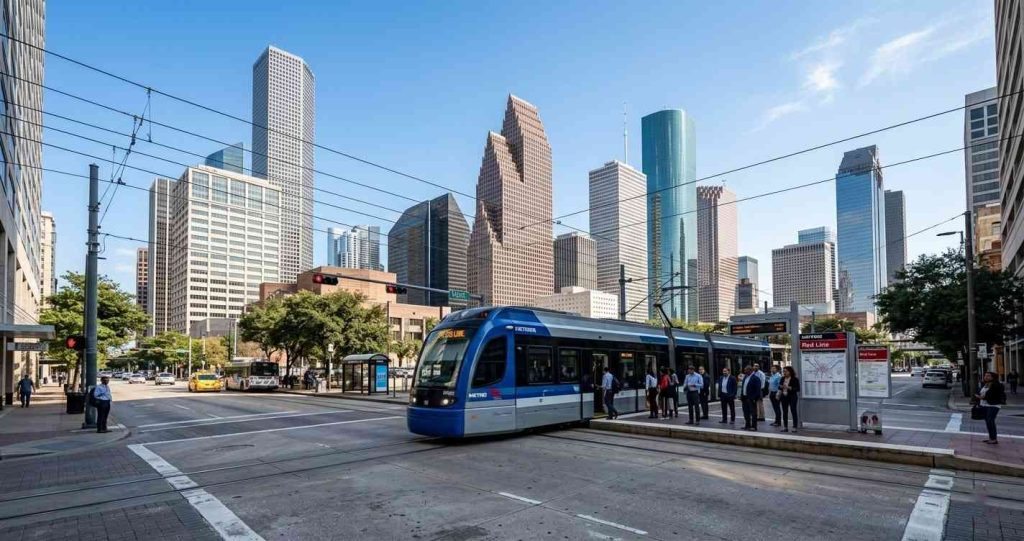
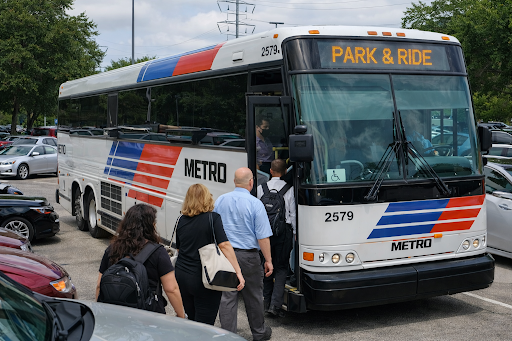
Green Commuting Options in Houston: A Complete Guide Houston has a reputation as one of America’s most car-dependent cities , and in many ways, that reputation is earned. But a quieter transformation has been underway for years. The city that built itself around the freeway is now investing seriously in light rail, protected bike lanes, electric bus fleets, and one of the most extensive Park & Ride systems in the country. For Houston commuters who are ready to reduce their carbon footprint, their fuel bill, or both, the options are better than most people realize. The stakes are real. According to the City of Houston’s Climate Action Plan, transportation accounts for 47% of Houston’s total greenhouse gas emissions , making it the single largest source of the city’s carbon output. The plan sets a goal of reducing community-wide emissions 40% below 2014 levels by 2030 and reaching carbon neutrality by 2050. Individual commuting choices, at scale, are one of the most powerful levers to get there. This complete guide covers every practical green commuting option available to Houstonians right now , from METRORail and Park & Ride buses, to bike share and e-bikes, to carpooling and vanpooling programs, to the city’s growing EV charging network. We’ll show you exactly what each option costs, where it works best, and how to get started. For a deeper look at the financial side, see our guide on ridesharing vs. car ownership costs in Houston.   🌿  Why Green Commuting Matters in Houston , By the Numbers 47% , Share of Houston’s greenhouse gas emissions coming from transportation (Houston Climate Action Plan, 2020) 40% , Target reduction in community-wide GHG emissions below 2014 levels by 2030 2050 , City of Houston’s goal year for carbon neutrality ~$10,000 , Annual carbon emissions saved per vehicle removed from daily road use (EPA estimate) 206,800 , Average weekday METRO boardings in Q4 2025 (bus + rail combined) 400+ miles , Bike lanes and trails built in Houston since adopting the Houston Bike Plan in 2017 2,726 , Total public EV charging stations in the Greater Houston–The Woodlands–Sugar Land metro area (PlugShare, 2025)   Option 1: METRORail , Houston’s Light Rail Network Houston’s METRORail is a 22.7-mile light rail system operated by the Metropolitan Transit Authority of Harris County (METRO).  It recorded 12.65 million boardings in 2025, averaging about 35,100 riders per weekday , and holds the title of the second most-traveled light rail system in the Southern United States and the highest ridership  per mile for light rail in the South. For green commuters living or working along its corridors, it is the fastest, most emissions-efficient option in the city. The Three METRORail Lines   Line Key Stops Best For Red Line Downtown, Museum District, Rice U, Texas Medical Center, NRG Park Medical Center workers, downtown office commuters, museum visitors Green Line EaDo, East End, Magnolia Park East Houston residents commuting downtown Purple Line U of Houston, Texas Southern U, Palm Center Students, Third Ward residents, southeast Houston commuters   Fares and How to Pay Single ride: $1.25 per boarding , one of the most affordable light rail fares in any major U.S. city Day Pass: Available for unlimited rides in a single day METRO Q Fare Card: Reloadable card available at ticket vending machines at every station and at select retailers. Faster boarding than cash or single-ride tickets GoMETRO app: METRO’s all-in-one app for trip planning, real-time tracking, and mobile fare payment , available for iOS and Android   💡 METRORail Pro Tips for Green Commuters Park & Rail combo: Drive to a Park & Ride lot, then connect to METRORail at key transfer stations. This eliminates downtown parking costs ($125–$280/month) while keeping your schedule flexible. Texas Medical Center: The Red Line drops you right at the TMC , the largest medical complex in the world, with over 60,000 employees. Skipping the parking garage battle alone is worth it. NRG Park events: The Red Line runs to NRG Stadium for Texans games, concerts, and the Houston Livestock Show & Rodeo , eliminating event parking entirely. Free WiFi: METRO has rolled out WiFi access across its rail and bus fleet, making your commute productive time.   Option 2: METRO Bus & Park and Ride   METRO’s bus network is the most used in Texas and the largest in the Southwest region, with 1,230 buses serving hundreds of routes across Harris County and surrounding areas.  For green commuters who don’t live near a METRORail line , which describes the majority of Houstonians , the bus network and Park & Ride system are the most practical low-emissions commuting tools available.   Park & Ride: The Green Commuter’s Best-Kept Secret METRO operates 29 Park & Ride lots across the Greater Houston region with more than 33,000 parking spaces. The concept is simple: drive to a suburban Park & Ride lot (free parking), board an express bus with direct, often non-stop service to Downtown Houston, the Texas Medical Center, Greenway Plaza, or the Energy Corridor, and arrive faster than you would have on the freeway , especially during rush hour, when buses use dedicated HOV lanes. Cost: $2.00–$4.50 per ride depending on distance zone, versus $10–$20/day for downtown parking plus fuel costs HOV lanes: METRO Park & Ride buses use the HOV/HOT lanes on I-10, I-45, US-290, and other corridors , often cutting trip times by 20–40 minutes vs. driving alone Emergency Ride Home program: Registered Park & Ride riders who have a mid-day emergency or unplanned overtime get a free ride home , eliminating the biggest anxiety about leaving your car at home The Woodlands Express: A commuter bus service separate from METRO that operates from three Park ‘n’ Ride lots in The Woodlands, providing frequent weekday service to downtown Houston, Greenway Plaza, the Medical Center, and Greenspoint   METRO’s Electric and Hybrid Fleet METRO currently operates 443 diesel-hybrid buses, reducing nitrogen oxide emissions by more than 50% compared to conventional diesel buses. The agency has a goal to

Sustainability

The Environmental Impact of Your Daily Houston Commute

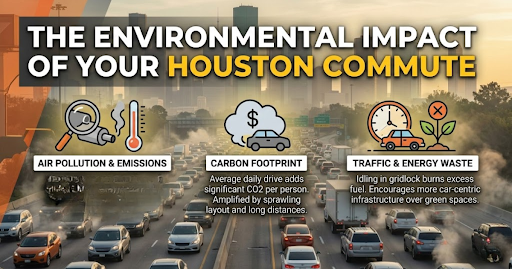
The Environmental Impact of Your Daily Houston Commute Houston’s daily traffic congestion does more than waste time; it significantly contributes to rising carbon emissions and declining air quality. With single-occupancy vehicles dominating major highways, per-person emissions remain high across the city. Transportation is one of the largest sources of greenhouse gases in the United States, and Houston’s sprawling layout makes the issue even more pressing. This guide explains how your commute affects the environment and how smarter shared transportation options like SafeTrip can help reduce your carbon footprint while improving urban mobility. For many professionals in Houston, commuting is simply part of the daily routine. Long drives, packed highways, and unpredictable delays have become normal. But beyond the frustration and fuel expenses, there is a larger issue at play: the environmental cost of commuting. Houston is one of the largest and most vehicle dependent metro areas in the country. With limited public transit coverage and significant suburban expansion, most residents rely on personal vehicles to get to work. As a result, traffic congestion continues to grow, and so do emissions. Understanding how your commute affects air quality and climate change is the first step toward making more sustainable travel decisions. Houston Traffic and Rising Carbon Emissions Houston’s transportation network has a measurable environmental impact. According to the U.S. Environmental Protection Agency (EPA), transportation accounts for approximately 29% of total U.S. greenhouse gas emissions, making it the largest contributing sector nationwide. Houston is one of the largest and most vehicle dependent metro areas in the country. With limited public transit coverage and significant suburban expansion, most residents rely on personal vehicles to get to work. As a result, traffic congestion continues to grow, and so do emissions. Understanding how your commute affects air quality and climate change is the first step toward making more sustainable travel decisions. Houston Traffic and Rising Carbon Emissions Houston’s transportation network has a measurable environmental impact. According to the U.S. Environmental Protection Agency (EPA), transportation accounts for approximately 29% of total U.S. greenhouse gas emissions, making it the largest contributing sector nationwide. The average passenger vehicle emits about 4.6 metric tons of CO₂ annually. When multiplied by hundreds of thousands of daily commuters, the numbers become staggering. Because most Houston commuters travel alone, emissions per passenger remain high compared to shared transportation options. Beyond climate impact, poor air quality can lead to: Increased asthma rates Higher healthcare costs Reduced overall public health Greater environmental strain on urban communities Driving alone also increases traffic density, which further worsens congestion and fuel consumption. In essence, single driver commuting creates a cycle where more cars lead to more delays and more emissions. How Ridesharing Reduces Environmental Impact Ridesharing provides a practical solution for reducing commuter related emissions. When multiple passengers share one vehicle, the carbon footprint per rider decreases significantly. Research shows that carpooling and shared rides can reduce individual commuting emissions by up to 45%. The U.S. Department of Transportation sustainability initiatives highlight how reducing vehicle miles traveled directly lowers emissions and fuel consumption. In a city like Houston, where commuting distances are often long and public transportation access can be limited, shared ride services offer a realistic middle ground between driving alone and traditional transit systems. By optimizing routes and combining trips, rideshare services help minimize unnecessary mileage, directly lowering greenhouse gas output. The Broader Environmental Benefits of Smarter Commuting Reducing emissions is only part of the story. Smarter commuting strategies also support long term sustainability goals for growing metropolitan areas. When fewer cars are on the road, cities benefit from the following: Improved air quality Reduced noise pollution Lower urban heat buildup More efficient infrastructure use Over time, widespread adoption of shared transportation can help cities delay costly highway expansions and reduce environmental degradation linked to excessive roadway construction. How SafeTrip Supports Greener Houston Travel SafeTrip is designed not just for convenience but for responsible commuting. By encouraging shared rides and optimizing travel routes, SafeTrip helps reduce the environmental footprint of daily transportation in Houston. SafeTrip supports sustainability by: Reducing single-occupancy vehicle trips Lowering per passenger emissions Minimizing fuel waste through efficient routing Supporting cleaner urban mobility solutions When Houston commuters choose SafeTrip instead of driving alone, they actively contribute to easing congestion and improving citywide air quality. Each shared ride removes potential vehicles from already crowded highways. Sustainability doesn’t require dramatic lifestyle changes; sometimes it begins with a smarter transportation choice. Conclusion The environmental impact of commuting in Houston extends far beyond fuel costs and traffic frustration. With transportation serving as one of the largest contributors to greenhouse gas emissions, daily travel decisions matter. Single-driver commutes increase carbon output, worsen air quality, and contribute to long-term climate challenges. However, shared mobility solutions provide a practical way to reduce emissions while maintaining flexibility and convenience. Choosing smarter rides like SafeTrip allows commuters to lower their environmental footprint without sacrificing reliability. Every shared trip represents a step toward cleaner air, reduced congestion, and a more sustainable Houston. Book your SafeTrip ride today and make your daily commute part of the solution.

Sustainability

How Carpooling Reduces Houston’s Traffic Congestion

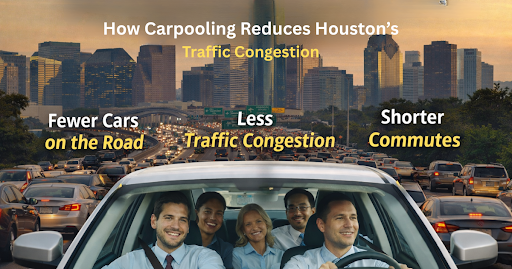
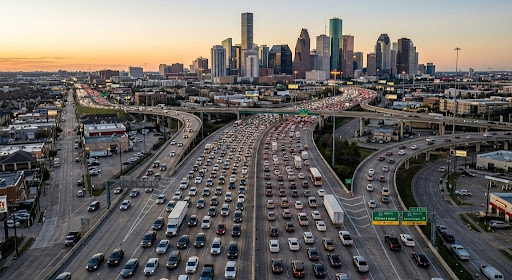
How Carpooling Reduces Houston Traffic Congestion Houston’s growing traffic congestion continues to impact daily commuters, businesses, and overall productivity. With most vehicles carrying only one passenger, limited road space is used inefficiently, leading to long delays and increased fuel consumption. Carpooling offers a practical solution by reducing the number of vehicles on the road, improving traffic flow, lowering emissions, and cutting commuting costs. By increasing vehicle occupancy and using existing infrastructure more efficiently, shared rides help create a smoother, more sustainable transportation system for Houston. Traffic congestion has become one of the most persistent challenges for Houston commuters. Long delays on major highways, unpredictable travel times, and rising transportation costs make daily travel stressful and inefficient. As the city continues to grow, the number of vehicles on the road increases, placing even greater pressure on already busy highways. Major routes such as I-10, I-45, and US-59 experience heavy congestion during peak hours, especially between 7 AM and 9 AM and 4 PM and 7 PM. According to research from the Texas A&M Transportation Institute, Houston drivers lose dozens of hours each year due to traffic delays. These lost hours translate into reduced productivity, higher fuel expenses, and lower overall quality of life. Houston’s Growing Traffic Problem Houston is one of the most car-dependent cities in the United States. According to the Texas A&M Transportation Institute, Houston commuters lose dozens of hours each year sitting in traffic. Major highways like I-10, I-45, and US-59 experience heavy congestion during peak hours, especially between 7 AM and 9 AM and 4 PM and 7 PM One major reason for Houston traffic congestion is low vehicle occupancy. Most cars on the road carry only one person. This means thousands of vehicles are using limited road space inefficiently. When road capacity remains the same but the number of single-occupancy vehicles increases, congestion becomes unavoidable. Carpooling addresses this imbalance by maximizing the use of each vehicle. Instead of multiple cars traveling the same route with one passenger each, shared rides reduce the total number of vehicles needed. Why Vehicle Occupancy Plays a Key Role in Traffic Reduction Traffic flow is influenced by the number of vehicles on the road, not just the number of commuters. When more people share rides, overall vehicle volume decreases. This reduction improves highway efficiency and allows traffic to move more smoothly. Even a modest shift toward carpooling during peak hours can produce noticeable improvements in travel times. By reducing vehicle density, shared commuting helps prevent bottlenecks and stabilizes traffic flow. Benefits of Carpooling for Traffic Congestion Carpooling offers multiple advantages that directly ease Houston’s traffic burden. By sharing rides, commuters help reduce the number of vehicles on the road, which leads to smoother traffic flow and more reliable travel times. Here are some key benefits: How Carpooling Reduces Houston Traffic Congestion   Table Of Contents How Carpooling Reduces Houston Traffic Congestion Houston’s Growing Traffic Problem Benefits of Carpooling for Traffic Congestion Economic and Community Advantages A Sustainable Long-Term Solution for Houston Start Carpooling with SafeTrip   Houston’s growing traffic congestion continues to impact daily commuters, businesses, and overall productivity. With most vehicles carrying only one passenger, limited road space is used inefficiently, leading to long delays and increased fuel consumption. Carpooling offers a practical solution by reducing the number of vehicles on the road, improving traffic flow, lowering emissions, and cutting commuting costs. By increasing vehicle occupancy and using existing infrastructure more efficiently, shared rides help create a smoother, more sustainable transportation system for Houston. Introduction Traffic congestion has become one of the most persistent challenges for Houston commuters. Long delays on major highways, unpredictable travel times, and rising transportation costs make daily travel stressful and inefficient. As the city continues to grow, the number of vehicles on the road increases, placing even greater pressure on already busy highways. Major routes such as I-10, I-45, and US-59 experience heavy congestion during peak hours, especially between 7 AM to 9 AM and 4 PM to 7 PM. According to research from the Texas A&M Transportation Institute, Houston drivers lose dozens of hours each year due to traffic delays. These lost hours translate into reduced productivity, higher fuel expenses, and lower overall quality of life. Houston’s Growing Traffic Problem Houston is one of the most car-dependent cities in the United States. According to the Texas A&M Transportation Institute, Houston commuters lose dozens of hours each year sitting in traffic. Major highways like I-10, I-45, and US-59 experience heavy congestion during peak hours, especially between 7 AM to 9 AM and 4 PM to 7 PM     One major reason for Houston traffic congestion is low vehicle occupancy. Most cars on the road carry only one person. This means thousands of vehicles are using limited road space inefficiently. When road capacity remains the same but the number of single-occupancy vehicles increases, congestion becomes unavoidable. Carpooling addresses this imbalance by maximizing the use of each vehicle. Instead of multiple cars traveling the same route with one passenger each, shared rides reduce the total number of vehicles needed. Why Vehicle Occupancy Plays a Key Role in Traffic Reduction Traffic flow is influenced by the number of vehicles on the road, not just the number of commuters. When more people share rides, overall vehicle volume decreases. This reduction improves highway efficiency and allows traffic to move more smoothly. Even a modest shift toward carpooling during peak hours can produce noticeable improvements in travel times. By reducing vehicle density, shared commuting helps prevent bottlenecks and stabilizes traffic flow. Benefits of Carpooling for Traffic Congestion Carpooling offers multiple advantages that directly ease Houston’s traffic burden. By sharing rides, commuters help reduce the number of vehicles on the road, which leads to smoother traffic flow and more reliable travel times. Here are some key benefits: Fewer Cars on the Road Every shared ride means one less single-occupancy vehicle contributing to congestion. With more carpools, traffic density decreases, especially during peak hours. Shorter Commute Times Reduced congestion translates into

Driver Resources

Maintaining Your Vehicle: Essential Tips for Rideshare Drivers

Maintaining Your Vehicle: Essential Tips for Rideshare Drivers Your car doesn’t just take you from point A to point B  it pays your bills. If you drive during Houston rush hour, manage long routes from Sugar Land to downtown Houston, or handle a packed Houston office commute, your vehicle works harder than most cars on the road. Add intense heat, heavy I-45 traffic, and unpredictable slowdowns across Houston highways, and small maintenance issues can quickly turn into expensive repairs. The difference between a profitable driver and a stressed driver often comes down to one thing: vehicle care. In this blog, you’ll learn simple, practical maintenance tips that protect your income, improve passenger safety, and keep your car running smoothly  even during peak Houston traffic conditions.   What You’ll Learn in This Blog Why maintenance directly affects your rideshare income How local driving conditions impact your vehicle Weekly and monthly checks every driver should follow Real-world products and services that make maintenance easier Smart driving habits that reduce repair costs How to maintain your car during long commuter routes Why Maintenance Matters More in Houston Driving in Houston is not “normal” city driving. According to the Texas Department of Transportation, congestion during peak hours can increase travel time by 30–40%. That means more idling, more braking, and more strain on your engine  especially during a heavy Houston commute. If you regularly drive suburban routes like the Katy office commute or daily trips between residential areas and business districts, your vehicle covers more miles than the average personal car. More miles = faster wear. Heat adds another layer of stress. Long hours on Houston highways in high temperatures can weaken batteries, reduce tire life, and increase cooling system strain. When your vehicle is your livelihood, preventive care isn’t optional  it’s protection. Weekly Checks That Take 10 Minutes (But Save Thousands) You don’t need advanced mechanical knowledge. You just need consistency. ✔ Check Tire Pressure Temperature changes affect air pressure quickly. Underinflated tires reduce fuel efficiency and wear out faster  especially when navigating stop-and-go I-45 traffic. A digital tire gauge costs little but can prevent early tire replacement. ✔ Inspect Brakes Frequent braking during Houston rush hour wears down brake pads faster. If you hear squeaking or feel vibration, don’t delay inspection. Brake replacements are far cheaper than accident repairs. ✔ Monitor Fluids Oil, coolant, and brake fluid levels should be checked weekly if you drive full-time. High-mileage drivers doing routes like Sugar Land to downtown Houston may need oil changes every 5,000–7,000 miles instead of waiting longer. Think of oil as engine insurance. Monthly Habits That Protect Your Income Small monthly checks prevent large unexpected bills. 🔧 Battery Testing According to AAA, battery failures increase significantly in hot climates. Houston heat accelerates battery wear. If your work includes long stretches across Houston traffic, test your battery monthly  especially before summer. 🔧 Air Conditioning Performance Passengers expect comfort during a Houston office commute. Weak AC can reduce ratings quickly. If your airflow weakens or cooling slows, get it checked early. 🔧 Suspension & Alignment Drivers covering the Katy office commute or outer suburb routes often experience uneven road surfaces. Poor alignment reduces tire life and fuel efficiency. If your steering pulls slightly to one side, it’s time for an alignment check.   Smart Tools Professional Drivers Use Modern drivers use technology to stay ahead. OBD-II scanners detect engine codes early. Navigation tools like Google Maps help avoid unnecessary congestion and reduce idle time. Preventive maintenance packages from providers such as Firestone Complete Auto Care offer scheduled inspections for high-mileage vehicles. Drivers who follow preventive programs reduce unexpected breakdown risks by up to 25%. Driving Habits That Reduce Wear and Tear Maintenance isn’t just mechanica, it’s behavioral. 🚗 Avoid Hard Acceleration Smooth driving improves fuel efficiency by up to 15%. Aggressive acceleration strains the engine and transmission. 🚗 Plan Around Peak Traffic Understanding the best time to commute in Houston helps minimize congestion stress. Early departures can reduce exposure to heavy slowdowns. If you also participate in Houston car pooling or Katy car pooling, timing pickups smartly reduces idle time and fuel waste. Reduce Excess Idling Waiting for passengers? Turn off the engine if the delay exceeds a few minutes. Idling burns fuel and increases engine wear. Real Example: What High Mileage Looks Like   A driver managing routes between suburbs and downtown five days a week can easily cross 30,000 miles annually. Add weekend airport runs and unpredictable Houston traffic, and the vehicle’s workload doubles compared to personal-use cars. Without proper care: Brake pads may need replacement twice per year Tires may wear out 20% faster Fuel efficiency may drop noticeably With structured maintenance: Fewer breakdowns Better passenger ratings More consistent income That difference directly impacts your earnings. Keep Records Like a Business Owner Professional transit agencies such as METRO Houston follow strict inspection schedules. Independent drivers should do the same. Keep records of: Oil changes Tire rotations Brake inspections Insurance updates This protects you during audits and improves resale value. Helpful Resources To stay informed about road conditions and safety updates: Traffic reports and road conditions – Texas Department of Transportation Vehicle safety statistics – National Highway Traffic Safety Administration Roadside support – AAA Real-time navigation – Google Maps Explore More on Our Website For deeper commuter insights, check out: Houston Office Commute Solutions Sugar Land Route Planning Guide Houston Car Pooling Options Best Time to Commute in Houston (These internal resources help you plan smarter routes and maximize efficiency.)  Ready to Drive Smarter? Your vehicle is your business partner. When you maintain it properly, you protect your safety, your ratings, and your income. If you’re part of a structured commuting system or looking to join a reliable network like NextSafeTrip, make vehicle care your competitive advantage. Book smarter routes. Maintain regularly. Earn consistently. Your next successful ride starts with the condition of your car.

Driver Resources

Best Times to Drive in Houston: Maximizing Your Earnings

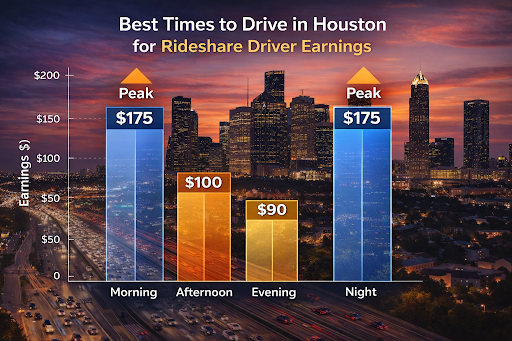
Best Times to Drive in Houston for Higher Earnings Discover the best times to drive in Houston as a rideshare driver. Learn peak earning hours, smart driver tips, and boost your income. Join SafeTrip today ! Introduction Being a successful carpooling driver in Houston isn’t just about staying online — it’s about driving at the right time. Houston traffic patterns directly affect ride demand, surge pricing, and overall driver earnings. In this guide, we’ll break down the most profitable hours for an Uber driver in Houston and share practical driver tips to help you earn more while working smarter. Drivers can also reach out and consult SafeTrip to understand the best times to drive based on specific Houston regions. Demand patterns vary across Downtown, suburban zones, airport corridors, and event districts — and SafeTrip provides guidance to help drivers maximize their earnings with smarter scheduling. Morning Rush Hours (6:30 AM – 9:30 AM) Houston’s morning commute is one of the most consistent earning windows for rideshare drivers. Major highways like I-45, I-10, and Loop 610 fill up quickly as professionals head Downtown, the Energy Corridor, and the Texas Medical Center. Airport trips are especially profitable during this window, particularly near George Bush Intercontinental Airport and William P. Hobby Airport. According to the Urban Mobility Report published by the Texas Department of Transportation , Houston consistently ranks among the most congested metro areas in Texas. You can review the official congestion report here. Longer commute times during high demand often translate into higher fare totals. Driver Tip: Position yourself near residential neighborhoods before 6:30 AM to catch early commuters and airport riders. Midday Strategy (11:30 AM – 2:00 PM) Midday driving may not feel busy, but strategic positioning can still generate steady ride volume. Business lunches, hospital visits, and short-distance meetings create frequent short trips in Downtown, Midtown, and Uptown. Many drivers ask, how much do rideshare drivers make in Houston? The answer varies by timing and demand. Short midday trips can stack quickly and reduce fuel usage compared to long freeway drives. This is also a smart time to organize finances and track rideshare driver tax deductions such as mileage, fuel, maintenance, and insurance. Driving during lighter traffic helps maintain fuel efficiency and lower stress. Drivers unsure about whether midday driving makes sense in their specific area can consult SafeTrip for localized insights and earning optimization strategies. Evening Rush & Surge Pricing (4:00 PM – 7:30 PM) Evening rush hour is often the highest earning period for any rideshare driver in Houston. As commuters leave offices, ride demand spikes across Downtown and the Energy Corridor. Live congestion updates from Houston TranStar show consistent slowdowns during these hours. Monitoring traffic conditions in real time can help drivers plan better routes. Surge pricing frequently activates when demand exceeds driver availability. Longer trip durations combined with peak pricing significantly improve driver earnings. If you’re ready to take advantage of these high-demand windows:👉 Join as driver Weekend Nights & Event Surges (8:00 PM – 2:00 AM) Weekend nights can dramatically increase your hourly average. Entertainment districts such as Midtown and Washington Avenue experience heavy demand after 9 PM. Major events at NRG Stadium and concerts at Toyota Center create temporary surge zones where ride requests multiply. National wage data from the Bureau of Labor Statistics shows that driver earnings vary significantly depending on demand timing and hours worked. Event-based driving often leads to: Higher surge multipliers Back-to-back trip requests Longer ride distances Safety Reminder: Stick to well-lit pickup zones and plan drop-offs carefully. Slow Hours to Avoid To maximize profitability, avoid: 9:30 AM – 11:00 AM 2:00 PM – 4:00 PM Early weekday evenings after 8:00 PM These periods typically show lower ride volume and minimal surge pricing. Instead of driving during low-demand hours, use this time to track expenses, monitor event schedules, and optimize your tax deductions. Driving smarter no longer  is what truly increases driver earnings. Key Takeaways For any rideshare driver in Houston, peak earnings come from strategic timing. Focus on morning rush, evening surge hours, and weekend events to maximize your income while minimizing wasted hours in traffic. Drivers unsure about whether midday driving makes sense in their specific area can consult SafeTrip for localized insights and earning optimization strategies Take the Next Step Ready to increase your driver earnings?👉 Join as a Safetrip driver today and start driving during peak Houston hours.

Driver Resources

Tax Deductions Every Rideshare Driver Should Know in 2026

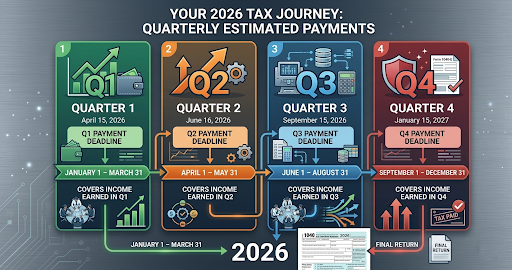
Tax Deductions Every Rideshare Driver Should Know in 2026 The typical Uber or Lyft driver misses $4,000–$7,000 in tax deductions every single year. That’s thousands of dollars left on the table , money you legally earned the right to keep. If you’re driving in Houston, Texas, the situation is actually better than most states: Texas has no state income tax, which means every federal deduction you claim goes directly into your pocket. In 2026, there are more deductions available to rideshare drivers than ever before , including a brand-new tips deduction that didn’t exist in previous years. Whether you’re full-time on the road or running Uber as a side income alongside your regular job, understanding your tax deductions as an independent contractor is one of the most important financial moves you can make this year. This guide is written specifically for Houston and Texas rideshare drivers. We’ll cover every deduction you qualify for, explain the Texas-specific advantages, and show you exactly how to keep the records the IRS requires. And if you’re still weighing whether driving full-time makes financial sense, check out our breakdown of ridesharing costs vs. car ownership in Houston to understand the full picture.   🌟 Texas Advantage: No State Income Tax Texas is one of only nine states with no personal state income tax. As a Houston rideshare driver, you only file federal taxes , not a separate state income return. Every dollar you deduct reduces your federal taxable income directly. For a driver earning $45,000/year, this can mean $3,000–$6,000 less in total tax owed compared to drivers in states like California or New York.   How Rideshare Taxes Work in 2026: The Basics   Uber and Lyft do not withhold taxes from your pay. You are classified as an independent contractor, not an employee , which means you receive a 1099-K or 1099-NEC instead of a W-2, and you’re responsible for paying both sides of self-employment tax. For Tax Year 2025 (the return you file in 2026), the self-employment tax rate is 15.3% , covering Social Security (12.4%) and Medicare (2.9%). On top of that, you owe federal income tax on your net profit. Combined, these obligations can easily reach 30–40% of your gross rideshare earnings if you don’t claim the deductions you’re entitled to. You report rideshare income on IRS Schedule C (Form 1040) , Profit or Loss from Business. Your deductions go on the same form, and you pay tax only on the net profit (income minus deductions). Every legitimate deduction you claim reduces both your income tax and your self-employment tax.   Tax Document What It Reports Form 1099-K Gross ride payments processed , includes Uber/Lyft’s cut, not just yours Form 1099-NEC Bonuses, referrals, incentives, sign-on payments Schedule C (1040) Where you report income AND claim all business deductions Schedule SE (1040) Calculates self-employment tax on your net profit Form 1040-ES Used to make quarterly estimated tax payments   ⚠️ Critical: 1099-K Reports Gross Fares , Not Your Take-Home Your 1099-K shows the full amount the passenger paid , including Uber’s or Lyft’s service fee. Example: Passenger pays $30. Uber keeps $7.50 (25%). Your 1099-K shows $30, not $22.50. The $7.50 commission is a deductible expense , but you must claim it on Schedule C. Do NOT use your bank deposit total as your income. Use the 1099-K and deduct the platform fees.   Deduction #1: The Mileage Deduction , Your Biggest Write-Off For most Houston rideshare drivers, the mileage deduction is by far the largest single write-off on their tax return. The 2026 IRS standard mileage rate is 72.5 cents per mile , up 2.5 cents from 2025’s rate of 70 cents per mile. If you drive 500 miles a week for rideshare, that’s a potential $350 deduction per week , adding up to over $18,200 in deductions for the year. What Miles Count as Deductible? Miles while a passenger is in your car Miles driving to pick up a passenger after accepting a ride request Miles spent repositioning to a higher-demand area after dropping off a passenger Miles driving to a car wash, detailing appointment, or mechanic for rideshare-related maintenance Miles driving to pick up supplies (phone mounts, USB chargers, water for passengers) What does NOT count: Miles driving from home to where you start accepting rides (your first deadhead of the day). Miles on personal errands. Miles when the app is off entirely. Standard Mileage vs. Actual Expenses , Which Should You Choose? You must choose one method for the year and stick with it. Here’s how they compare for a typical Houston driver: Method How It Works Best For Standard Mileage72.5¢/mile (2026) Multiply business miles × $0.725. Simple, no receipts needed for vehicle costs. Most drivers. Easiest to track, covers gas, repairs, depreciation in one rate. Actual Expenses Deduct real costs: gas, insurance, repairs, maintenance, depreciation or lease payments. Drivers with high actual vehicle costs or a newer vehicle with heavy depreciation. Key Rule Cannot switch from actual expenses to standard mileage in subsequent years if you used actual in year 1. Start with standard mileage if uncertain , you keep flexibility to switch later. 💡 Houston Driver Tip: Track ALL Miles , Uber Undercounts Uber’s annual tax summary gives an ‘estimated online miles’ figure , but it consistently undercounts. Uber typically only tracks miles while a passenger is in the car. Pickup miles and repositioning miles are frequently missed. Use a dedicated mileage app as your primary record: Stride (free), MileIQ, or Everlance. The IRS requires a mileage log with: date, starting point, destination, business purpose, and miles driven. Driving 500 miles/week in Houston is common. At 72.5¢/mile, every 100 untracked miles = $72.50 in missed deductions. Deduction #2: The New 2026 Tips Deduction , Up to $25,000 Tax-Free This is brand new for 2026 and most drivers don’t know about it yet. Starting with Tax Year 2025 (returns filed in 2026), a new federal law allows rideshare and delivery drivers to deduct qualified tips up

Houston Commute Tips

Texas Medical Center Commute: Park & Ride vs. Rideshare Comparison

Texas Medical Center Commute: Park & Ride vs. Rideshare Introduction – Houston Commute Realities  Houston’s booming job market and sprawling metro area make commuting a central part of daily life for thousands of workers. Whether you’re heading to the Texas Medical Center, navigating Houston traffic, or tackling the stretch from Sugar Land to downtown Houston, choosing the right commute option can be a difference-maker. For many professionals,especially those doing a Houston office commute or Katy office commute, deciding between a Park & Ride service or a rideshare option like Uber or Lyft can impact time, cost, and stress levels. Today, we’ll compare these two popular options and help you decide which fits your lifestyle and schedule. Understanding Houston Traffic Patterns  Houston traffic is notoriously unpredictable. Major thoroughfares like I-45, US-59, and the Houston highways experience heavy congestion, especially during Houston rush hour (typically 6:30–9:30 AM and 4:30–7:00 PM). Add in construction zones near key employment hubs like the Texas Medical Center, and your commute can quickly become frustrating. According to the Texas A&M Transportation Institute’s Urban Mobility Report Houston consistently ranks among the top U.S. cities for congestion delays. Additionally, data from INRIX Global Traffic Scorecard highlights Houston as one of the most delay-prone metro areas in Texas during peak commuting hours: If you’re traveling from farther suburbs like Katy, Sugar Land, or The Woodlands, dealing with tangled highways and stop-and-go traffic becomes part of daily life. Car dependency is high in Houston, making Houston car pooling and Katy car pooling essential solutions for reducing stress and saving money. What Is Park & Ride?  Park & Ride refers to commuter bus services where you park your car at a designated lot and ride a bus into major work districts like downtown or the Texas Medical Center. Houston Metro operates several Park & Ride lines designed to ease congestion and cut down on commuting hassles and In Houston, services are operated by METRO Houston . Advantages of Park & Ride : Cost-effective: Lower monthly expense than daily gas and parking fees. Stress-free: You avoid freeway traffic behind the wheel. Eco-friendly: Reduces overall vehicle emissions. Drawbacks: Fixed schedules: May not align with all work hours. Possible transfers: Might require a shuttle or another bus to the final destination. What Is Rideshare?  Ridesharing in Houston is a transportation option where two or more people share one vehicle while traveling in the same direction. Also known as carpooling in Houston, it helps commuters lower fuel costs, reduce traffic congestion, and cut carbon emissions. With long daily commutes across Downtown, the Energy Corridor, and the Medical Center, Houston carpool options offer a smart and cost-effective alternative to driving alone. Shared commuting makes travel more affordable, efficient, and environmentally friendly for Houston residents.   Advantages of Rideshare: Door-to-door service: Convenient pickup and drop-off. Flexible timing: No fixed schedule. Shared rides available: Reduces cost with car pooling options. Drawbacks: Cost can add up: Especially during peak traffic or long routes like Katy to Houston. Surge pricing: Higher fares when demand is high (e.g., Houston rush hour). What Is SafeTrip? SafeTrip is a structured commute-based car pooling service designed specifically for repeat weekday office commuters. Unlike public transit or on-demand rideshare, SafeTrip focuses on predictable routes such as Katy to the Texas Medical Center or Sugar Land to Downtown Houston. SafeTrip blends the affordability of Park & Ride with the convenience of rideshare , offering flat pricing, no surge fees, and route optimization tailored to working professionals. Advantages of SafeTrip: Flat, predictable pricing: No surge fees during rush hour. Commute-focused routes: Designed around real office corridors. Professional structure: Built specifically for repeat weekday commuters. Door-to-door or structured pickup zones: No parking required. Drawbacks: Route-based availability: May operate only on high-demand commuter corridors. Primarily weekday-focused: Designed for office schedules rather than casual trips. Feature Park & Ride Rideshare (Uber/Lyft) SafeTrip (Structured Commute Service) Cost Generally cheaper monthly Varies, can be high Flat, predictable commute pricing Flexibility Set schedules On-demand Structured routes with commuter focus Commute Time Control Less control Full control Optimized fixed commuter corridors Traffic Stress Minimal Moderate to high Reduced via planned shared routes Surge Pricing No Yes No surge pricing Best For Predictable schedules Irregular hours Daily office commuters (Katy, Sugar Land, TMC routes) Parking Included Yes No Pickup-based, no parking needed Designed For Public transit users General city riders Working professionals & repeat commuters   Commuting Costs A big question for commuters is expense. Park & Ride typically costs a flat monthly rate and includes parking. Meanwhile, rideshare costs depend on distance, traffic, time of day, and whether surge pricing is active. If you’re doing a long-distance commute, with say Sugar Land to downtown Houston , rideshare fares can become pricey. SafeTrip positions itself between these two models by offering structured pricing designed specifically for office commuters, avoiding the unpredictability of peak-hour surcharges. Time Management and Convenience If your office hours are structured and consistent, Park & Ride gets you from point A to B without changing lanes in gridlocked traffic. Houston consistently ranks among major metro areas for congestion, based on mobility data from the Texas A&M Transportation Institute. That said, Park & Ride requires precise timing to sync with shuttle departures. Rideshare allows flexible departure times but means you’re still subject to the same Houston traffic delays as other vehicles on the road. SafeTrip offers a middle-ground approach by planning structured commuter corridors that reduce unpredictability while still offering more direct routing than traditional bus systems. Commuter Comfort and Productivity With Park & Ride, you can read, work, or catch up on emails while someone else handles the driving. Public transit commuting trends and time-use data reported by the Bureau of Transportation Statistics show that many transit riders use commute time productively. Rideshare also gives you time to multitask, but being dropped directly at your office especially if you work late or start early remains a major convenience advantage. SafeTrip commuters benefit from structured, repeat travel patterns, allowing them to plan their

Houston Commute Tips

Avoiding Houston’s I-45 Nightmare: Smart Commute Alternatives

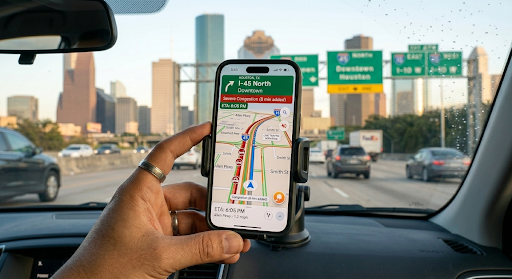
Avoiding Houston’s I-45 Nightmare: Smart Commute Alternatives Table of Contents Why I-45 Has Become Houston’s Most Notorious Commute Alternative 1: Hardy Toll Road , The Best I-45 North Bypass Alternative 2: METRO Park & Ride , Let the Bus Beat the Traffic Alternative 3: HOV Lanes and Carpooling Alternative 4: Rerouting Around I-45 Entirely Alternative 5: Shift Your Schedule or Work Remotely Alternative 6: Where You Live Changes Everything Alternative 7: METRORail for the Final Mile Downtown Building Your Personal I-45 Commute Strategy   Nine of the top 25 most congested roadways in Texas are on the I-45 corridor through Houston. More than 100 people died on I-45 in 2023 alone, and traffic volumes on the northern stretch are projected to rise by at least 40% by 2040. If you commute on I-45 every day, you already know this highway is not getting easier any time soon. The North Houston Highway Improvement Project (NHHIP) is underway a $9.7 billion, 18-year reconstruction of I-45 from Beltway 8 to I-10 and through downtown. Segment 3 construction began in 2024, Segment 2 isn’t expected to start until after 2030, and Segment 1 is targeted for 2032. That means years of lane closures, detours, and unpredictable delays on one of Houston’s most critical highways. The good news: you have more commute options than you probably realise. This guide walks through seven proven I-45 commute alternatives that Houston drivers are using right now to save time, cut stress, and still arrive on time. Already thinking about the cost side of Houston commuting? Read our comparison of ridesharing vs. car ownership costs in Houston to see how different transport choices stack up financially.   Why I-45 Has Become Houston’s Most Notorious Commute I-45 isn’t just busy, it’s structurally overwhelmed and actively under reconstruction. The highway serves as the main spine connecting downtown Houston to its northern suburbs Spring, The Woodlands, Conroe and to its southern communities: League City, Friendswood, Clear Lake, and Galveston. According to TxDOT’s NHHIP project overview, the reconstruction spans I-45 from U.S. Highway 59/I-69 to Beltway 8 North, including connecting freeways. The current HOV lane serves only one direction during peak periods and remains unused for large parts of the day. During rush hour, even the HOV lane is congested. For daily commuters, this translates to one reality: predictable, multi-year delay. Understanding why the road is broken is the first step to routing around it. Alternative 1: Hardy Toll Road The Best I-45 North Bypass If you commute from The Woodlands, Spring, or anywhere along I-45 North, the Hardy Toll Road is your single best detour. Running parallel to I-45 North and connecting to downtown Houston, Hardy consistently moves faster during peak hours than the main interstate, sometimes by 20-30 minutes in each direction. The road is tolled, but for a daily commuter the time savings more than offset the cost. And if you pair it with an EZ Tag, you get discounted rates across all of Houston’s toll network.   Who Hardy Toll Road Works Best For Commuters from The Woodlands, Spring, Conroe, or Tomball heading downtown Anyone whose I-45 North drive regularly exceeds 45 60 minutes during rush hour Drivers willing to trade a modest toll for predictable, faster travel times   💡 Pro Tip: Get an EZ Tag EZ Tag gives you discounted toll rates on Hardy and every other Houston toll road. For a 5-day-a-week commuter, the annual discount can save $100- $300 compared to paying cash rates. Sign up at hctra.org it takes minutes and the tag pays for itself within weeks.   Alternative 2: METRO Park & Ride Let the Bus Beat the Traffic Houston’s METRO Park & Ride system is one of the most underused commuting tools in the entire city and for I-45 corridor riders, it’s a genuine game-changer.   METRO operates express Park & Ride buses that use the HOV lanes on I-45 North and I-45 South bypassing the very gridlock that’s eating your mornings. You park free at a suburban lot, board an express bus, and arrive downtown without touching your steering wheel. One-way fares range from $2 to $4.50 depending on distance far less than fuel, wear, and downtown parking combined. Key Park & Ride Routes for I-45 Commuters I-45 North corridor (The Woodlands, Spring, Kuykendahl): Routes 202 Kuykendahl and 204 Spring run in the I-45 North HOV lane to downtown Houston, running every 15 minutes on weekday mornings I-45 South corridor (Clear Lake, Bay Area, Pearland): Routes 246 Bay Area and 247 Fuqua use the I-45 Gulf Freeway HOV lane, serving south Houston commuters heading to the Medical Center and downtown Grand Parkway Park & Ride (far north suburbs): Route 222 Grand Parkway runs every 4 minutes at peak hours one of METRO’s most frequent suburban routes   METRO also offers a free Emergency Ride Home program registered commuters get up to three free rides home per year in the event of a midday emergency. It’s a safety net that makes it genuinely practical to leave your car behind. See all Park & Ride routes and schedules at ridemetro.org.   ✅ Why Commuters Switch to METRO Park & Ride • Express buses use I-45 HOV lanes bypassing congestion completely • Fares from $2 $4.50 one way (far cheaper than fuel + downtown parking) • Free Emergency Ride Home program for registered riders • Work, read, or decompress on the bus instead of gripping the wheel • METRO’s METRONow initiative is actively improving frequency and reliability in 2025   Alternative 3: HOV Lanes and Carpooling Speed Through Together You don’t have to give up your car to beat I-45 traffic. Houston’s HOV (High Occupancy Vehicle) lanes are open to vehicles carrying two or more people during rush hours on I-45, Highway 59, and Highway 290. The speed difference between a standard lane and an HOV lane during peak hours can be dramatic, sometimes 25 minutes versus 70 minutes for the same route. The trick is finding a carpool partner. Houston has

Houston Commute Tips

Houston’s Worst Traffic Times: When to Book Your SafeTrip Ride

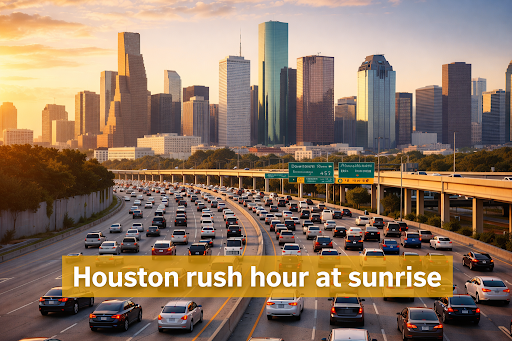
Houston’s Worst Traffic Times: When to Book Your SafeTrip Ride If you live in Houston, you already know one thing  timing can make or break your day. A smooth 25-minute Houston commute can quickly turn into a 75-minute crawl. Whether you’re planning your daily Houston office commute, managing a Katy office commute, or traveling from Sugar Land to downtown Houston, understanding peak congestion windows helps you avoid wasted time and daily frustration. With more than 7 million residents in the Greater Houston metro area, congestion isn’t random, it’s predictable. In this guide, you’ll learn when Houston traffic is at its worst, how corridors like I-45 traffic patterns affect reliability, and the best time to commute in Houston so you can schedule your SafeTrip ride   strategically. What You’ll Learn in This Blog Why traffic congestion keeps increasing across major Houston highways The worst morning and evening peak windows How Interstate bottlenecks impact daily travel time Timing strategies that reduce delays by up to 40% Why structured commuting is becoming more popular How to book smarter and avoid daily gridlock Why Houston Traffic Feels Worse Every Year According to the Texas A&M Transportation Institute Urban Mobility Report, Houston drivers lose 60+ hours per year in traffic congestion. That’s more than a full workweek spent idling. Growth is the primary driver. Expanding suburban communities like Katy, Sugar Land, and Cypress push more vehicles onto major Houston highways such as: Interstate 10 (I-10 West / Katy Freeway) Interstate 45 (I-45 North & South) Interstate 69 (US-59 corridor) The Texas Department of Transportation reports steady increases in traffic counts along I-10 West and I-45 North over the past decade. More drivers + limited roadway expansion = longer peak delays. Morning Houston Rush Hour (6:30 AM – 9:00 AM) Morning Houston rush hour starts earlier than many expect. Peak congestion window: 7:00 AM – 8:30 AM Average delay: 35%–50% longer than off-peak travel If you’re commuting from Sugar Land to downtown Houston, a standard 30-minute trip can extend to 60–70 minutes during this window. I-45 traffic north and south of downtown slows dramatically during school months. Even minor fender-benders can trigger backups lasting an hour or more. Strategic Timing Tip For a fixed Houston office commute, departures: Before 6:30 AM After 9:15 AM can significantly reduce exposure to stop-and-go congestion. Evening Congestion Is Often Worse Evening traffic tends to be more volatile than mornings. Peak evening window: 4:00 PM – 6:30 PM Travel speed reductions: Up to 60% Outbound lanes toward Katy and Sugar Land become heavily congested. The Katy office commute along I-10 West is especially challenging  what should be a 35-minute drive often exceeds 75 minutes on Fridays. Structured commuting options like Houston car pooling or scheduled shuttle services help convert that lost driving time into productive time instead of high-stress steering-wheel frustration. The Reality of I-45 Traffic Few corridors test commuter patience like Interstate 45. It remains one of the most heavily traveled and construction-impacted highways in Texas. Congestion intensifies near the 610 Loop and downtown interchange zones. Common choke points include: I-45 North near Beltway 8 Downtown split interchanges Southbound merges during evening Houston rush hour Real-time updates from Houston TranStar can help, but departure timing remains the most reliable control variable. Katy and West Houston: Growing Pressure West Houston expansion continues to intensify the Katy office commute along Interstate 10. During peak congestion: Speeds drop below 20 mph Delays increase by 45% or more For professionals considering Katy car pooling, shared commuting reduces per-person fuel costs and helps lower the number of single-occupancy vehicles contributing to Houston traffic buildup. Sugar Land to Downtown Houston: A Critical Corridor The Sugar Land to downtown Houston route via Interstate 69 is one of the region’s busiest. Normal conditions: 25–30 minutes During Houston rush hour: 50–70 minutes Congestion typically builds after 6:45 AM. A 30-minute earlier departure can cut total travel time by 20–30 minutes. If arrival downtown by 9:00 AM is mandatory, a 6:15 AM departure is far safer than a 7:15 AM gamble. Best Time to Commute in Houston Based on traffic flow patterns and commuter data: Best Morning Windows Before 6:30 AM After 9:15 AM Best Afternoon Window 1:00 PM – 3:00 PM Traveling during these off-peak periods can reduce congestion exposure by 25%–40%. Avoid: 7:00 AM – 8:30 AM 4:30 PM – 6:30 PM Scheduling outside these windows dramatically improves reliability. The Cost of Driving Alone Peak Houston traffic doesn’t just cost time  it costs money. The average commuter spends thousands annually on: Fuel Insurance Parking Maintenance Depreciation Houston car pooling and structured commuter services reduce direct vehicle expenses while also lowering stress levels and improving arrival consistency. Commuting and Productivity Research published by the Harvard Business Review indicates that longer commute times correlate with higher stress and reduced workplace productivity. Arriving fatigued from I-45 traffic or prolonged Houston highways congestion impacts performance, focus, and overall well-being. Reducing commute volatility isn’t just logistical  it’s strategic. Take Control of Your Houston Commute You can’t eliminate Houston rush hour, but you can control how you move through it. Whether you’re navigating a daily Houston office commute, handling a Katy office commute, or traveling from Sugar Land to downtown Houston, strategic timing makes a measurable difference. Book Smarter. Travel Calmer. With SafeTrip, you can: Reserve your seat before peak congestion hits Avoid unpredictable delays on major Houston highways Choose reliable Houston car pooling or Katy car pooling options Align your ride with the best time to commute in Houston Reduce fuel costs and daily driving stress A simple 30-minute shift in departure time can save 20–40 minutes per day  adding up to more than 100 hours per year reclaimed. Don’t Gamble With Peak Traffic Avoid the 7:00 AM scramble. Skip the 5:30 PM gridlock. Plan ahead and ride with confidence. Book your SafeTrip ride today and turn your Houston commute into productive, stress-free time.

Scroll to Top